Simple Basing Ideas and Textures for Beginners
Explore easy miniature basing ideas and textures that make any figure look finished, from desert sand to urban rubble, with no special tools needed.
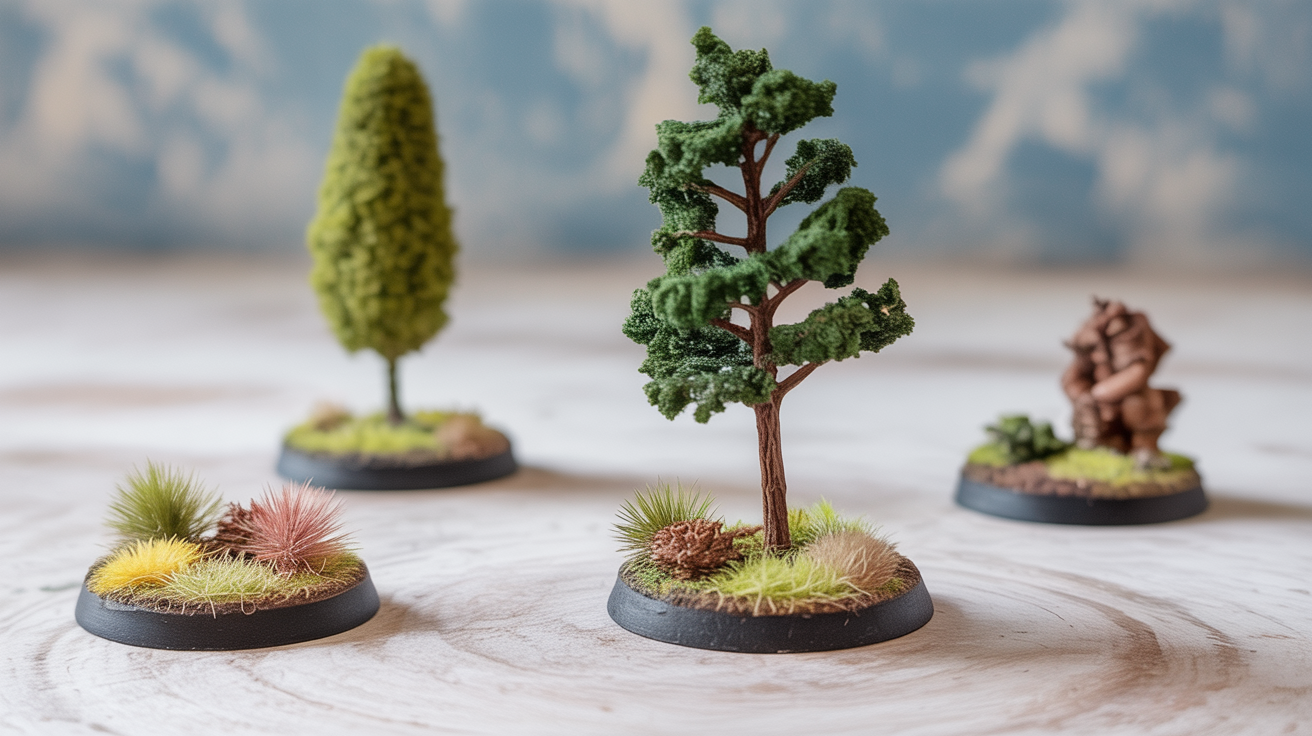
A plain black base is the most common beginner mistake, and the easiest to fix. Good miniature basing ideas don't require expensive tools or weeks of practice. Pick a theme, gather a handful of materials, and a finished base takes under an hour.
Common Basing Themes at a Glance
Before buying anything, it helps to settle on a theme. The base should suggest where your miniature lives: a windswept desert, a crumbling city, a shaded forest floor. Here's a reference covering the most popular options, what materials you'll need, and the look each one produces.
| Theme | Core Materials | Visual Effect |
|---|---|---|
| Desert sand | Fine craft sand, tan/ochre paint | Dry, warm, open ground |
| Grassland | Static grass, tufts, green texture paste | Meadow or overgrown field |
| Urban rubble | Gravel, cork chunks, broken sprue, gray paint | War-torn city streets |
| Forest floor | Coarse sand, brown flock, dried herbs | Shaded woodland |
| Snow | White texture paste or baking soda, PVA | Winter or arctic setting |
| Dungeon stone | Cork tile, dark wash, gray drybrush | Underground or castle flagstones |
| Marsh or swamp | Gloss medium, green paint, fine static grass | Boggy, waterlogged terrain |
| Volcanic | Black sand, crackle medium, red/orange paint | Hellish or lava-field |
Most painters pick one theme per army or project and apply it consistently. That repetition is what makes a painted collection feel like it belongs to the same world, even if individual bases vary slightly.
For a full walkthrough of the basing process from primer to sealer, how to base a miniature: a beginner's guide covers the core steps.
What to Use (and What You Already Have)
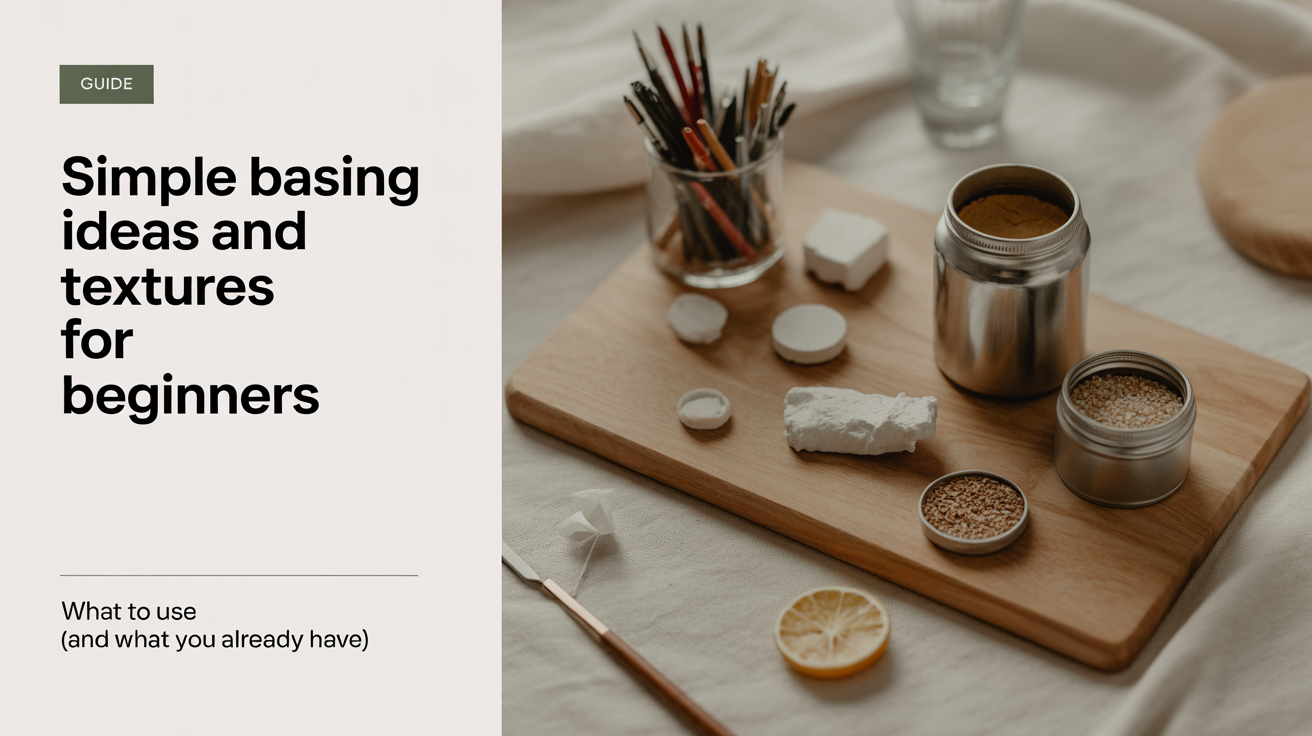
Good basing textures minis often come from materials already around the house. You do not need to buy everything at once.
Sand and grit. Fine sand from a craft store works perfectly. Play sand from a hardware store is nearly identical and costs far less per pound. Coarser ballast from model railway suppliers gives a rocky, gravelly look. Even dried dirt from the backyard (spread it on paper and let it dry fully for a day) is functional.
Cork. Break cork floor tiles or wine corks apart by hand and the edges come out rough and natural. Layered and glued, cork makes convincing rock outcroppings, crumbling walls, or raised terrain. It is lightweight, takes paint well, and costs almost nothing if you save wine corks over time.
Baking soda. Mixed with PVA and a small amount of white paint, baking soda produces a serviceable snow texture. It dries matte and gritty, which reads better than pure white paint at arm's length.
Dried herbs and spices. Oregano, thyme, and cracked pepper from the kitchen look like undergrowth, dead leaves, and debris at miniature scale. Seal them with diluted PVA after gluing. The effect is surprisingly convincing and completely free.
Broken sprue. Cut or snap leftover plastic sprue into irregular pieces. Glued to a base and painted gray with a dark wash, they read as broken concrete, masonry fragments, or industrial debris.
Texture paste. Pre-made pastes from miniature paint brands speed things up and come in sandy, rocky, and muddy variants. They are worth buying once you have a theme you plan to repeat across many bases. For occasional use, the household alternatives above work just as well.
How to Build a Basic Sand Base
A sand base is the most forgiving beginner option. It suits almost any setting and scales from fantasy foot soldiers to sci-fi infantry without much adjustment.
Materials
- Fine sand (craft or play)
- PVA glue
- A cheap, stiff brush (old brushes are fine)
- A base coat paint in brown or tan
- A lighter tan or bone color for drybrushing
- One or two grass tufts (optional)
Steps
- Thin your PVA with water to about a 1:1 ratio and brush it over the entire base surface. Avoid getting it on the model itself, though a little on the feet is no catastrophe.
- Dip the base into a container of sand, or sprinkle sand over it and press gently. Shake off the excess over a piece of paper so you can funnel it back into the container.
- Let it dry fully. Thirty minutes is the minimum; overnight is better.
- Paint the whole base with your brown or tan base coat. Two thin passes work better than one thick one. This seals the sand and locks it in place.
- Drybrush with a lighter color. Load a brush lightly, wipe most of the paint off on a paper towel, then drag it across the sand surface. The raised bits catch the lighter tone and the whole base suddenly looks three-dimensional.
- Place tufts by dabbing a small blob of PVA onto the base, pressing the tuft down, and leaving it to set for 20 minutes.
- Paint the rim. Dark brown or black keeps the focus on the model and looks clean on a gaming table.
The whole process involves about 30 minutes of active work. Most of the time is simply waiting for layers to dry.
Mixing Textures for More Interesting Results
Single-material bases are perfectly respectable. Mixing two or three materials, though, adds variety and makes a base feel like a real place rather than a uniform surface.
Dirt and Grass
Cover most of the base in texture paste or painted sand, then press in a tuft or two and scatter static grass in one corner. The different textures keep the eye moving across the base. For detailed techniques on applying static grass and flock, how to add flock, grass tufts, and static grass goes through the full process.
Stone and Moss
Glue down cork pieces, paint them gray, then work green flock or moss-effect texture paste into the crevices with a brush. This reads immediately as aged stonework, which suits dungeon crawl miniatures, undead armies, or anything that belongs in a ruin.
Sand and Pooled Water
Apply texture paste across most of the base, then build a slight depression in one area while the paste is still wet. Once dry, fill that depression with gloss medium or two-part resin. The contrast between the matte ground and the glossy water pool is striking and takes only a few extra minutes.
Mud with Rooted Tufts
Apply dark brown texture paste thickly, then press grass tufts in while it's still wet. The tufts look like they're rooted in the mud rather than just sitting on top of it. A selective gloss coat over part of the mud makes the wetter areas look freshly churned.
Experimenting here is low-risk. Bases are small, materials are inexpensive, and you can always scrape off wet texture paste and start again if something looks wrong.
Painting and Finishing the Rim
The base rim is easy to overlook, but it frames everything above it. Most painters use a dark brown or black for gaming bases. It matches the tabletop aesthetic of most systems, draws no attention to itself, and looks consistent across an entire army.
Color harmony between the base and the model also matters. Bright, colorful miniatures settle better on a natural, earthy base. Dark miniatures, like black-armored knights or deep-red demons, benefit from a lighter base, something sandy or snowy, so the figure stands out rather than disappearing into the background.
For specifics on rim painting and final base cleanup, how to paint and finish the base rim covers the technique in detail.
A final matte varnish over the whole base (avoiding any water or gloss effects you've applied) protects the sand and flock from flaking during handling, which is a real problem for gaming miniatures that get picked up hundreds of times.
Frequently Asked Questions
What are the simplest miniature basing ideas for a first-timer?
A sand base is the most forgiving place to start. PVA glue, craft sand, brown paint, and a light drybrush color is all you need. The process is slow to go wrong, the materials cost almost nothing, and the result looks noticeably better than a plain black base.
Can I use household items for basing textures on minis instead of buying products?
Yes, and many experienced painters do exactly that. Baking soda makes snow, dried kitchen herbs look like undergrowth, broken sprue pieces pass for rubble, and cork from wine bottles is excellent for rock shapes. Fine sand from a hardware store is functionally identical to craft sand at a fraction of the cost.
Should I base before or after painting the miniature?
Either order works, and painters disagree on this. Basing before painting means you might get sand or PVA on the model's lower legs, so you'll touch those up afterward. Basing after painting means you need to be careful around the feet. For beginners, basing before painting is slightly easier to manage. The important part is that the base gets finished at all.
How do I keep easy miniature bases looking consistent across a whole army?
Choose one theme and repeat it. Same base colors, same tufts, same rim shade on every model. The materials don't need to be placed identically, but the overall color palette should match. Buying one brand of tufts and using them across every base in the project is the simplest consistency tool available.
Does basing texture paste outperform sand?
Both have a place. Sand is cheaper and produces a more natural, irregular surface. Texture paste is faster, more predictable, and skips the base coat step since it's already pigmented. For a beginner starting out, sand is the lower-cost way to learn. Texture paste makes more sense once you're painting batches of ten or twenty bases at a time and want repeatable results quickly.