Miniature Paints Explained: Acrylics, Washes, and Contrast
Learn the main types of miniature paint, including acrylics, washes, and contrast paints, so you can choose the right product for every step.
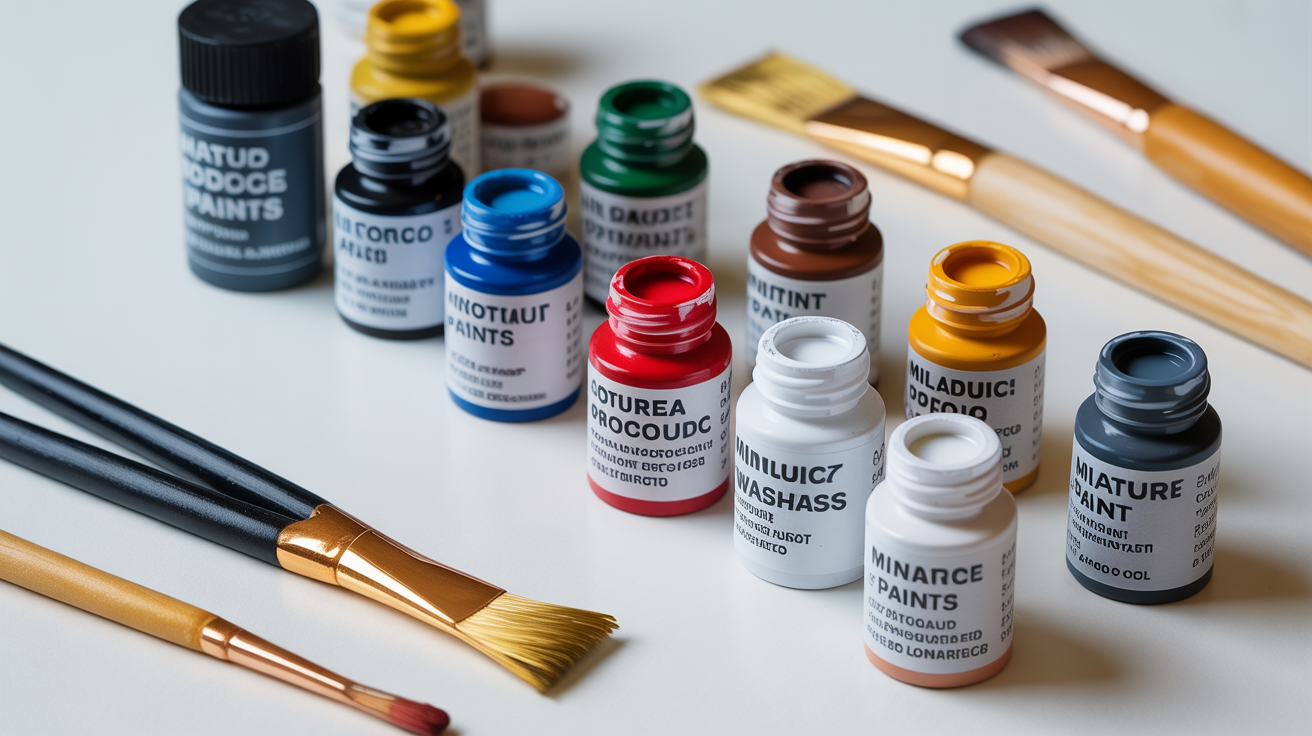
Walk into any hobby store and you'll see dozens of paint pots labeled base, layer, shade, contrast, technical, and more. Understanding the types of miniature paint and what each one does makes your painting faster, less frustrating, and noticeably better from the first model onward.
Most miniature paints are water-based acrylics. They dry quickly, clean up with water, and are safe for home use when you follow basic ventilation guidelines. Within that broad category, manufacturers have developed several specialized formulations, each designed to solve a specific problem in the painting process. This guide breaks them all down.
Acrylic Miniature Paint: The Foundation
Standard acrylic miniature paint is the workhorse of the hobby. It covers well, mixes easily, and accepts thinning without losing color strength when you add water or a dedicated medium. Most brands group their acrylics into two sub-types: base paints and layer paints.
Base paints are highly pigmented with good coverage. They are made to cover primer and dark undercoats in one or two coats. The consistency is thicker, and they are often used first on a model.
Layer paints are thinner and slightly more translucent. They are built up gradually on top of a base coat to create smooth gradients or highlight edges. You rarely want to use a layer paint as your first coat on bare plastic because it takes multiple passes to build opacity.
Getting comfortable with both types is a core skill. Read more about how to thin your paints the most important beginner skill to see why consistency matters so much for both.
Washes and Shades: Fast, Forgiving Depth
A wash (sometimes called a shade) is a very thin, low-viscosity paint designed to flow into recesses. You apply it over a base-coated area, and capillary action pulls the pigment into crevices, panel lines, and fabric folds. What is left on the raised surfaces dries much lighter, creating instant depth and shadow without any blending skill required.
Washes are the single fastest way to make a flat paint job look three-dimensional. A brown wash over flesh tones brings out muscle and bone definition. A black wash over grey armor reads as steel almost immediately.
A few things to keep in mind:
- Washes can pool on flat surfaces, leaving tide marks. Apply them in thin passes rather than flooding the model.
- Matte washes dry flatter and are easier to paint over. Gloss washes settle more evenly but require a matte varnish afterward to remove the sheen.
- You can apply a wash selectively (called a "pin wash") using a fine brush to target only specific recesses, which gives you more control on large flat panels.
Washes work best over a solid base coat. Trying to use them over bare plastic or primer usually gives muddy, uneven results.
Contrast and Speed-Shade Paints Explained
Contrast paint (a term from one major manufacturer that has become a catch-all in the hobby community) is the most talked-about innovation in beginner miniature painting in the last decade. These paints combine a tinted medium with highly concentrated pigment in a single pot. When brushed over a light grey or white primer, the formula flows into shadows automatically while leaving highlights largely transparent.
The result looks like a base coat and wash were applied at once, and on textured surfaces like fur, scales, chainmail, or fabric, it can look genuinely impressive with very little effort.
What contrast paint is good for
- Speed painting large batches of models
- Painting skin, cloth, leather, and organic textures
- Building colored shadows directly without mixing
What contrast paint struggles with
- Smooth, flat surfaces (it tends to pool and streak)
- Achieving very saturated, opaque coverage (the formula stays translucent by design)
- Painting over dark primers (the translucency kills the effect)
Many painters use contrast paints for basecoating and shading in one pass, then add edge highlights with a standard layer paint to finish the model. Others use them purely as glazes or tinted washes. Contrast paint explained at its simplest: it is a clever shortcut, not a replacement for the full paint range.
Dry Paints (for Drybrushing)
Some manufacturers sell paints with a thick, almost chalky consistency specifically for drybrushing. The technique involves loading a stiff brush, wiping nearly all the paint off on a paper towel, and then dragging the near-dry brush across raised edges and textured surfaces. The tiny amount of paint left deposits only on the highest points, creating bright highlights on fur, stone, grass, and similar textures.
Standard paint works fine for drybrushing too, but dedicated dry paints are thicker right out of the pot, which reduces the trial-and-error of getting the consistency right.
Technical and Effect Paints
Beyond the core paint types, most brands offer specialty technical paints that mimic specific materials or effects:
| Paint Type | What It Does | Common Uses |
|---|---|---|
| Texture paste | Creates rough, gritty surfaces | Basing, rubble, sand |
| Blood/gore effects | Glossy red with texture | Wounds, weapons, gross details |
| Verdigris/rust effects | Greenish or orange granular finish | Aged metals, old copper |
| Crackle medium | Dries with a cracked paint effect | Dried mud, aged paint |
| Gloss varnish | High-shine protective coat | Gems, eyes, wet surfaces |
These are not essential for beginners, but they are genuinely useful once you are past your first few models. Most can be applied straight from the pot with minimal technique required.
Paints to Buy First
If you are buying your first set of paints, prioritize:
- A small selection of base paints in your main colors (a neutral grey, a flesh tone, a brown, a metal)
- A black or brown wash (one pot goes a long way)
- A white and a light grey layer paint for highlighting
- A pot or two of contrast paint in colors you will use often (flesh and dark green are versatile starting points)
You do not need dozens of pots to start. More brushes and better technique will improve your results more than a larger paint collection. Speaking of brushes, see what brushes do you need for miniature painting for a practical starting kit.
A Note on Sprays and Airbrush Paints
Spray primers and varnishes use aerosol propellants and require ventilation. Always use them outdoors or in a well-ventilated space, and keep the can moving to avoid pooling. If you move into airbrushing later, the same rule applies: use a respirator rated for paint fumes and set up near an open window or a dedicated spray booth.
Airbrush-specific paints are pre-thinned and low-viscosity. They can be brushed on in a pinch, but they are formulated for use through a nozzle and may not cover as well with a standard brush.
Keeping Your Paints in Good Shape
Miniature paints dry out. A few habits extend their life significantly:
- Add a small drop of water or acrylic medium if a pot starts to thicken, then stir thoroughly with a cocktail stick.
- Store paints upright and away from direct sunlight and heat.
- Clean threads before closing lids to prevent the lid from sealing permanently.
- Pots with dried rings around the cap can often be rescued with warm water and a paper towel.
A wet palette is one of the best tools for managing paint consistency during a session, especially for layer paints and washes. Read how to use a wet palette for miniature painting to set one up.
Frequently Asked Questions
Can I use craft store acrylic paint instead of miniature paint?
Yes, but there are trade-offs. Craft acrylics are cheaper and widely available, but they tend to have larger pigment particles and less consistent viscosity. They can obscure fine details more easily and may need more thinning. Many painters use them for base colors or terrain, where the difference matters less.
Do I need to use the same brand for all my paints?
No. Paints from different manufacturers mix fine and can be used on the same model. The naming conventions (base, layer, shade) vary by brand, but the underlying formulas are compatible. Buy what is available locally or matches the specific effect you need.
What is the difference between a wash and a glaze?
A wash flows into recesses and creates shadow. A glaze is a thin, translucent coat applied over the whole surface to shift color temperature or blend transitions. Both are thinned paints, but a wash is applied wet and intentionally allowed to pool in recesses, while a glaze is applied more deliberately to specific areas.
How do I know if my paint is too thin?
Properly thinned paint should flow smoothly off the brush but not run freely or bead up. A useful test: brush a stroke on a piece of white paper. If it looks watery, streaky, or barely leaves color, it is too thin. If it drags or leaves brushstrokes in the dried film, it needs more thinning.
Is primer the same as a base coat paint?
No. Primer is a surface prep product, usually available as a spray or a brush-on formula. Its job is to bond to plastic, resin, or metal and give paint a surface it can grip. A base coat paint is applied on top of primer to lay down your first color. Skipping primer often leads to paint rubbing off under handling.