How to Paint NMM (Non-Metallic Metal) for Beginners
Learn the light-source logic behind non-metallic metal painting and a simple two-tone approach that works on any beginner miniature.
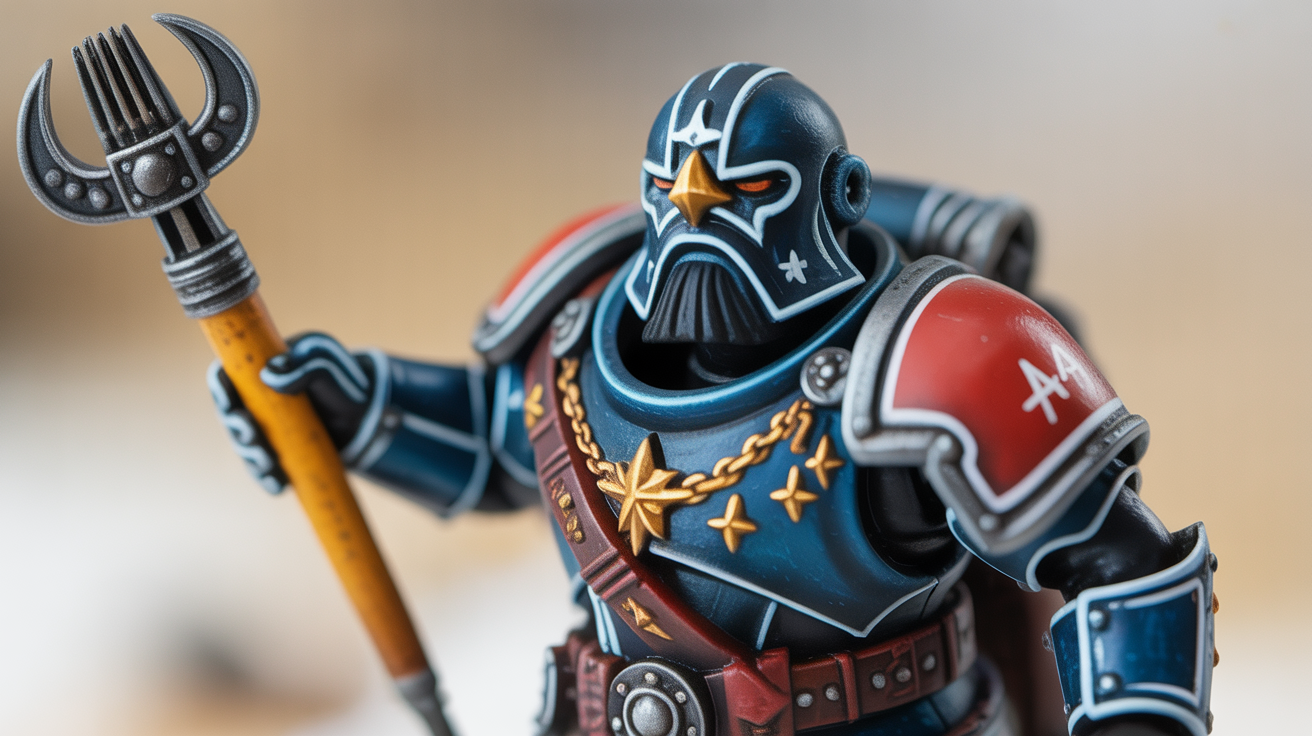
Non-metallic metal, usually shortened to NMM, is a painting technique where you replicate the look of shiny metal using regular matte acrylics instead of metallic paints. No shimmer in the paint itself. The illusion comes entirely from contrast and where you place your lights and shadows.
It sounds harder than it is. The core logic is simple, and once you understand it, you can apply a workable version on your first attempt.
What Makes Metal Look Like Metal
The reason NMM works is that real metal is an extreme reflector. A polished sword blade does not just show a bright spot where light hits it. It picks up the sky above, the ground below, and hard edges between those zones. That is the whole secret: metal shows fast, high-contrast transitions from dark to light, often within a few millimetres.
Compare that to skin or cloth, where the transition from shadow to highlight is gradual. Metal snaps from nearly black to near-white with very little in between.
When you paint NMM you are faking that contrast gradient using the same layering technique you would use on any surface, just pushed to a much more dramatic range. The dark areas go darker than you think they should, and the bright spots go brighter.
Light Source Logic Before You Pick Up a Brush
Before you mix any paint, decide where your light is coming from. Pick one direction and stick to it across the whole model. Most painters default to light coming from the upper left or upper right at roughly 45 degrees. That matches how display bases and gaming tables tend to be lit.
Once you know your light source:
- Surfaces facing toward the light get your lightest tones.
- Surfaces facing away from the light get your darkest tones.
- Edges that cut across the light direction catch a sharp bright highlight.
- The very bottom of a curved surface, like the underside of a pauldron, picks up a faint reflected light from the ground. This reflected light is subtle but it is what sells the metal read.
Flat surfaces have a simpler pattern: dark at one end, light at the other, with a sharp bright band somewhere in the upper third. Curved surfaces wrap that gradient around the form.
If you have already built a habit of using washes to define shadows, you already understand recesses pulling dark. NMM is the same idea scaled up dramatically.
A Simple Two-Tone Approach for Beginners
Full NMM can involve five or six paint stages. For a first attempt, start with just two tones and a white highlight dot. This approach works on small areas like a sword blade, a buckle, or a single shoulder pad.
For silver or steel:
- Base coat the area in a mid-grey. A standard grey primer coat with a flat grey paint on top works fine.
- Apply your base coat and let it dry fully before moving on.
- Mix that grey with black and paint the shadow half. Leave the grey showing in the centre.
- Mix the grey with white and paint a band in the upper third of the highlight zone, leaving the mid-grey visible between shadow and highlight.
- Add a small dot or thin line of pure white at the brightest point. On a sword blade this lands near the top edge closest to your light source. On a round surface it sits slightly off-centre toward the light.
For gold or brass:
Follow the same structure but shift your palette. Start with a brown-orange as your base, use a dark reddish-brown for the shadow, and mix the base with yellow, then cream, for your highlights. The final bright spot uses the same near-white but it reads as a warm white rather than cool.
The key in both cases: your shadow should be dark enough that it looks almost black in the recesses. Beginners often leave shadows too light, and the illusion falls flat as a result.
When NMM Is Worth Doing and When to Reach for a Metallic Pot
NMM takes longer than metallic paints and requires more practice to look convincing. That is an honest statement, not a discouragement. Knowing when to use it saves you time.
Good situations for NMM:
- A model with a large, prominent armour plate where the metal is the visual centrepiece
- Competition or display pieces where you want full control over how light reads across the surface
- Situations where you want a specific colour temperature for the metal (cold grey steel, warm antique gold, bronze with a green cast)
Good situations to use metallic paints instead:
- Rank-and-file troops where you need to paint twenty or forty models to a consistent standard
- Small details like rivets, chain links, or tiny clasps where NMM contrast is hard to control at that scale
- Any situation where painting speed matters more than competitive finish quality
There is no rule that says you have to commit to one or the other. Some painters use metallic paints for base troops and reserve NMM for hero or centrepiece models. Both methods have a place in the hobby.
Edge highlighting pairs well with both approaches. On metallic paints it adds crisp definition. On NMM it reinforces the bright edge that sells the shine.
Building Confidence with Small Tests
The fastest way to improve NMM is to practice it somewhere low-stakes. Cut a small rectangle of card or foam and paint a sword blade shape in your two-tone NMM before touching a model. It takes five minutes and you will see immediately whether your contrast is strong enough.
When you move to a real model, start with a small area: a single knee pad or a dagger rather than a full suit of armour. Get one piece reading convincingly, then expand to the rest of the model using the same logic.
NMM rewards slowing down and looking at reference. Photos of actual polished metal or real armour show you exactly where the gradients fall. Your phone camera can pull up plenty of reference in under a minute.
Frequently Asked Questions
Do I need special paints for NMM?
No. Any standard acrylic paint works. You need colours that can mix to a near-black on one end and blend up to near-white on the other. Most beginner paint sets already include everything you need for silver NMM. For gold, a brown-orange and a pale yellow alongside your white are enough to get started.
Why does my NMM look flat instead of shiny?
Almost always, the contrast is not strong enough. The shadow zone should be close to black and the highlight should be close to white. Most beginners leave both ends too close to mid-tone. Push the darks further down and the brights further up and the illusion will snap into place.
Can I combine NMM and real metallic paint on the same model?
Technically yes, but they rarely read well together in person. Metallic paints catch ambient light and shift as the model moves. NMM is locked to your chosen light source. Side by side they look inconsistent. If you want to mix approaches, keep them on separate models rather than the same piece.
How long does NMM take compared to painting with metallic paints?
On a single sword blade, a quick two-tone NMM might add ten to fifteen minutes over a metallic approach. On a model in full armour, the time difference is significant, sometimes an hour or more depending on how refined you want the result. Metallic paints are faster for most hobbyists most of the time.
Is NMM only for advanced painters?
A full, competition-grade NMM finish takes practice. A basic two-tone version that reads as convincing metal on the tabletop is within reach for anyone who has painted a few models. The technique is the same high-contrast gradient logic used across the whole hobby. If you can layer and shade, you can attempt NMM.