How to Paint Miniatures Faster (Without Them Looking Bad)
Learn how to paint miniatures fast with batch painting, contrast paints, slapchop, and more speed techniques that still look great on the tabletop.
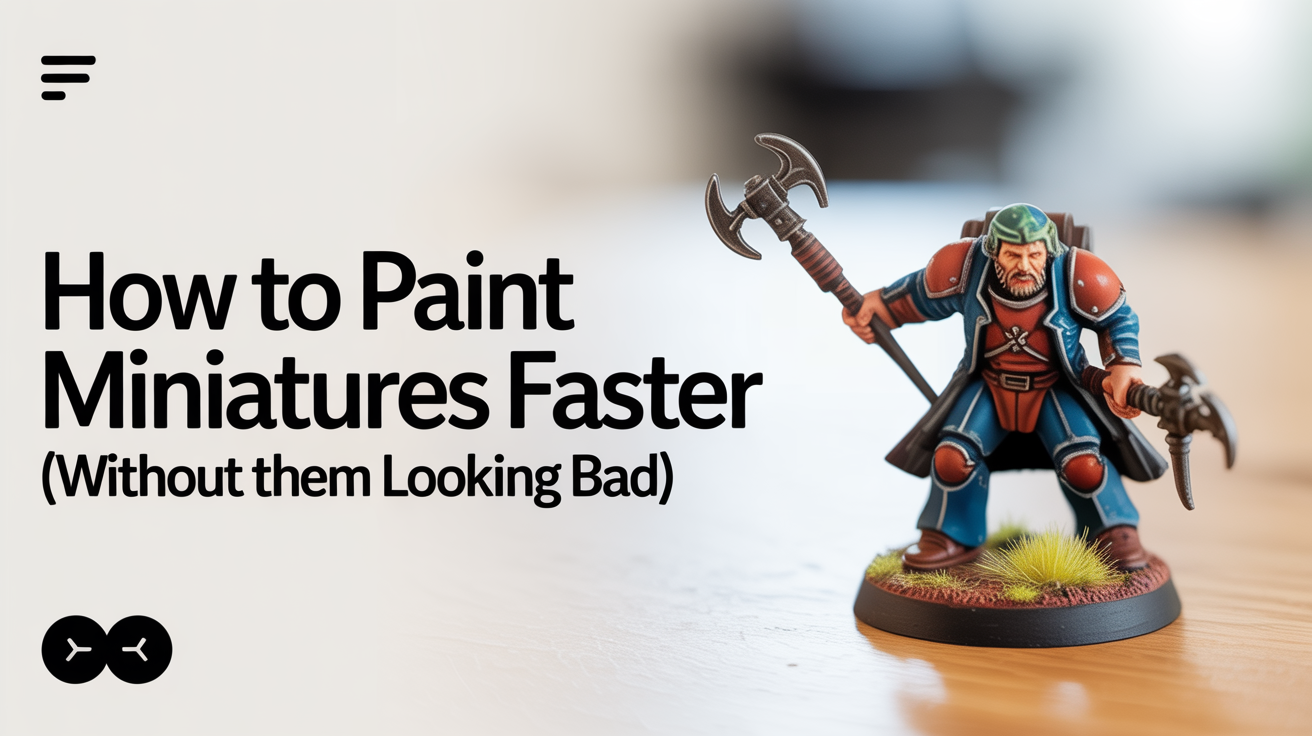
Speed painting miniatures is not about cutting corners; it is about cutting the right ones. Most of the time spent on a miniature goes to waiting for paint to dry, switching colors needlessly, and overworking details that will never be seen across a gaming table. Fix those habits and a full squad that once took a weekend can be done in an afternoon.
Why Miniatures Take So Long (And What to Do About It)
Before picking up any speed tricks, it helps to understand where the time actually goes. Most painters lose hours to:
- Color-switching penalty. Every time you rinse a brush and load a new color, you pause the flow. Minimize this by completing one color across every model before moving on.
- Overpainting small details. Eyes, buckles, and tiny text look great in close-up photography. On the tabletop, three feet away under dim lighting, nobody sees them.
- Waiting between coats. Thin layers dry fast, but thick paint pools stay wet and bleed under the next coat. Keep paint thin and move on.
- Decision fatigue. Stopping to plan the color scheme mid-session kills momentum. Pick a palette before you open a pot.
Once you see where time leaks, it is much easier to plug the holes.
The Big Speed Techniques, Compared
Different approaches suit different goals. Here is a quick overview of the most popular methods for quick miniature painting:
| Technique | What It Is | Best For |
|---|---|---|
| Contrast / Speed Paints | Tinted medium that shades and tints in one coat | Army painting, horde armies |
| Slapchop | Zenithal prime, then contrast paints over grey scale | Fast shading with natural depth |
| Zenithal Priming | Light grey from above over black base coat | Better contrast with any paint range |
| Batch Painting | Painting many models in parallel, one color at a time | Identical units, squads, hordes |
| Drybrushing | Dragging a nearly-dry brush across raised edges | Fast highlights on textured surfaces |
| Washes / Inks | Thin, pigmented liquid that pools in recesses | Instant shading on any base coat |
None of these are mutually exclusive. The fastest painters mix and match based on what each miniature actually needs.
Contrast and Speed Paints
Single-coat paints from various manufacturers work by suspending pigment in a medium that flows into recesses and thins out on raised surfaces. One coat over white or zenithal primer and a model can look table-ready in minutes.
The catch: they perform better on textured sculpts than on flat, smooth areas. Large flat armor panels can look a little streaky. Fix this by drybrushing one highlight tone over the top once the contrast coat is fully dry.
Slapchop
Slapchop starts with a black primer, followed by a heavy drybrush of grey, then a lighter drybrush of white on the very highest points. The result is a greyscale zenithal effect achieved with rattle cans and a wide brush. Contrast paints applied over this base pick up natural shadows without any blending. The whole workflow for a basic infantry model can run under fifteen minutes.
If you have never tried zenithal priming before, it is worth testing on a spare sprue. The effect is subtle on a single model but transforms how an entire unit reads as a group.
Drybrushing and Washes as a Pair
These two techniques have been the backbone of fast army painting for decades. Base coat, wash, drybrush. That three-step sequence handles the majority of texture on a figure. Fur, chainmail, rough cloth, stone bases, and wood grain all respond well.
The one area where this falls short is smooth, polished surfaces like plate armor or cloth cloaks. Those benefit from layering or contrast paints instead.
Batch Painting: The Biggest Time Saver
Batch painting is the most impactful speed painting miniatures habit you can build. Instead of finishing one model completely before starting the next, you paint all models in a group at the same stage at the same time.
A simple batch painting workflow:
- Prime all models the same way.
- Base coat all skin on every model.
- Base coat all leather on every model.
- Continue through each color in sequence.
- Apply a wash to the whole batch at once.
- Highlight each color across all models.
- Paint bases as a group.
The time savings compound with each step. Loading a specific paint onto a brush takes a moment. Doing it once and painting twenty models saves nineteen reload cycles. At ten steps per model, that is close to two hundred wasted stops eliminated.
Batch sizes between five and twenty work best for most painters. Below five, you lose much of the advantage. Above twenty, models at the back of the queue can dry out between coats or get jostled.
Organizing Your Workspace for Batch Painting
A little setup goes a long way. Cork strips, old blister packs, or simple wooden boards can hold a row of models at a consistent angle. Paint them in the same sequence every time so the steps become automatic. Group pots in the order you will use them so your hand knows where to reach without looking.
If you find paint drying on models mid-session because you are moving slowly, a wet palette keeps your paints workable for longer. It also cuts the number of times you need to re-thin a color.
Cheat Codes for Specific Parts
Some parts of a miniature eat disproportionate amounts of time. Here are quick fixes for each:
Eyes. Skip them entirely on infantry models or paint a single dark dot. A black wash in the eye socket reads as shadow from any normal viewing distance.
Gems and lenses. A dot of the base color, a smaller dot of a lighter version, and a tiny white highlight. Three dots, no blending.
Metallics. Prime black, base coat with a dark metallic, apply a brown or black wash, then drybrush a brighter metallic on top. Fast and effective.
Bases. Do them all at the same time at the end. Texture paste or basing sand applied with a brush, then drybrushed once dry, is faster than any individual approach.
Faces. If you are not entering a painting competition, a base coat, one wash, and a single highlight on the nose and cheekbones is enough. Faces matter more than any other part of a miniature because human eyes go there first, but tabletop quality does not require glazing and blending.
Common Mistakes That Slow You Down
Learning how to paint miniatures fast is partly about removing friction. A few habits that look like shortcuts actually cost time:
Painting too thick. Thick paint obscures detail, requires more coats to correct mistakes, and takes longer to dry. Keep your paint consistency thin (like skimmed milk) and build up gradually. If you have had trouble with paint coverage looking uneven, the guide on why miniatures painting looks thick and clumpy covers the root causes.
Overloading the brush. A brush loaded with too much paint drags and leaves stroke marks. Load less, paint more often. If brush strokes are already showing up on your models, the article on how to get rid of brush marks on miniatures has direct fixes.
Fixing mistakes immediately. When paint goes somewhere it should not, most painters stop and correct it right away. But wet paint spreads the error further. Let it dry first, then paint over it. For bigger errors, the guide on how to fix mistakes and repaint a miniature walks through the right sequence.
Perfectionism on hidden surfaces. The underside of a base, the back of a cloak that will always face the wall, the inside of a shield arm. Do not paint surfaces that will never be seen.
Setting a Realistic Speed Target
What is actually achievable for batch painting minis at a decent quality level? A rough guide by type:
- Infantry (28mm, basic unit): 20 to 40 minutes per model in a batch of ten
- Cavalry or large monsters: 45 to 90 minutes each, depending on complexity
- Characters and heroes: 1 to 3 hours (these justify the extra time since they are on the table every game)
- Bases for a full squad: 15 to 30 minutes for ten bases together
These numbers assume a three-step approach (base coat, wash, one highlight) and tabletop-quality results. Add time for more highlights, edge highlighting, or freehand.
Do not compare your pace to professional painters on video. They cut footage, speed up clips, and have painted the same steps thousands of times. A beginner who gets ten infantry models done in a weekend is doing well.
Frequently Asked Questions
Is it okay to skip certain steps to paint miniatures fast?
Yes, with intention. Skipping highlights on infantry models that will always be seen at a distance is a practical choice. Skipping primer is not; primer helps paint stick and last, so that step should stay regardless of how quickly you want to finish.
Do contrast paints always look good?
Contrast and speed paints look excellent on textured surfaces and over zenithal priming. On flat or smooth areas they can streak or pool in a way that looks uneven. The fix is either a light drybrush after the coat dries or a thin glaze of the same color to smooth things out.
How many models should I batch paint at once?
For most people, batches of five to fifteen feel manageable. At five models you get meaningful time savings. Past twenty, it becomes harder to keep track of where you are in the process, and models at the end of the row can dry before you reach them.
Will speed-painted models hold up to scrutiny at gaming events?
Tabletop quality is the accepted standard at most casual and competitive gaming events. As long as models are fully based and all surfaces have some color, they will fit in. Nobody is failing to have fun because your sergeant's belt buckle is not highlighted.
What is the one thing that most improves speed without hurting quality?
Batch painting, without question. Painting one color across every model in a group before switching colors removes more wasted time than any other single change you can make to your workflow.