How to Fix Mistakes and Repaint a Miniature
Learn how to fix miniature painting mistakes with simple touch-ups or a full strip. Covers safe strippers, gloves, ventilation, and plastic testing.
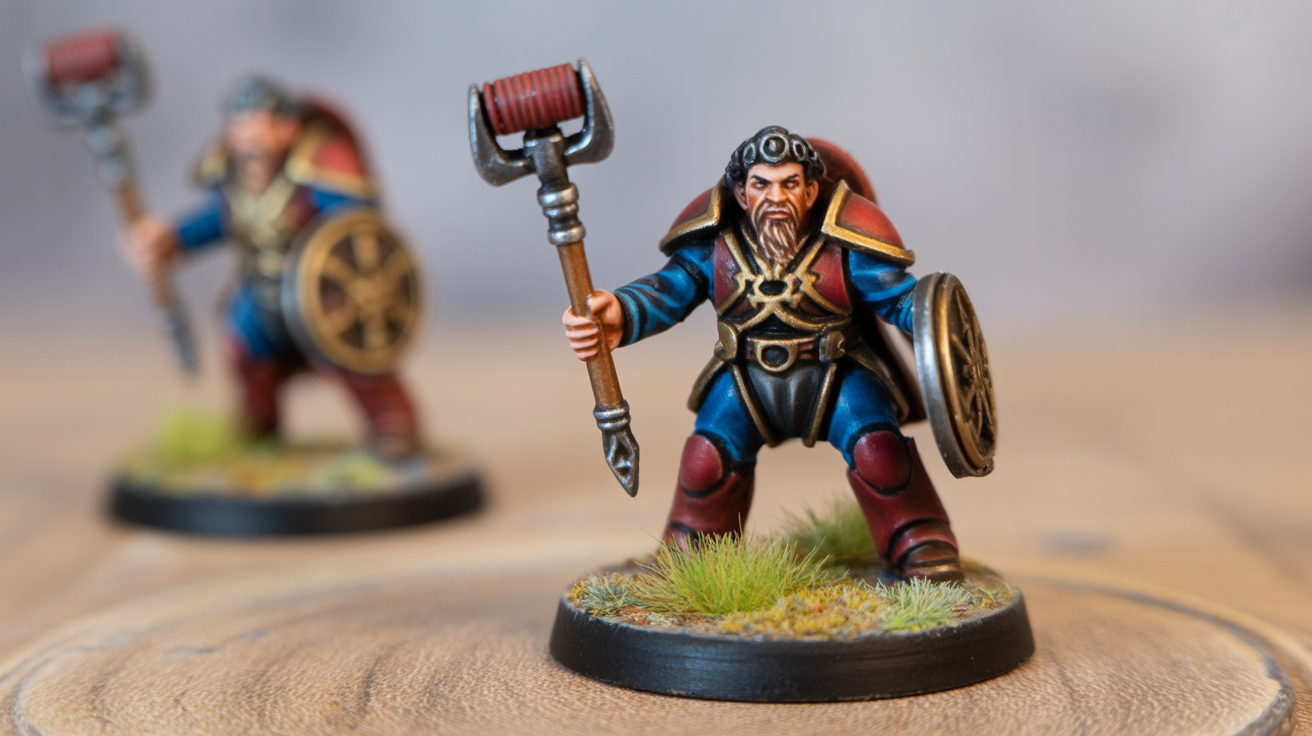
Every painter, at every skill level, ends up staring at a miniature wondering what went wrong. Knowing how to fix miniature painting mistakes is less about perfection and more about having a reliable toolkit of options. Sometimes a dab of paint sorts it out in thirty seconds; other times a full strip is the smarter path.
Small Fix or Full Strip? Start Here
The first decision is whether to work on top of what you have or start fresh. Both are valid, and the right call depends on how bad the problem actually is.
Paint over it if:
- The mistake is a stray brushstroke, a bleeded edge, or a single colour in the wrong place
- The mistake affects only one small area
- Paint layers are still thin (one or two coats)
- The miniature is plastic and you want to preserve existing work
Strip and repaint if:
- The paint is thick, gloopy, or obscuring fine details (a common problem covered in why your paint is too thick and clumpy)
- You have multiple overlapping errors across the whole model
- Brush marks are layered badly and touch-ups keep compounding the issue
- You want a genuine fresh start
The table below summarises the tradeoffs:
| Situation | Best Approach | Time Cost |
|---|---|---|
| One wrong colour | Paint over with base coat | 5 minutes |
| Streaky or patchy basecoat | Thin the paint and repaint that layer | 15-30 minutes |
| Heavy build-up everywhere | Full strip | 1-4 hours (soak time) |
| Broken or chipped primer | Spot prime, then repaint area | 30 minutes |
| You just don't like the colour scheme | Full strip | 1-4 hours (soak time) |
Fixing Small Mistakes by Painting Over Them
Painting over a mistake is the fastest correction, and it works well for most day-to-day errors.
Correcting a Stray Brushstroke
Load a small brush with the base colour of the area you accidentally painted into. Apply it carefully over the stray mark. Let it dry, then continue. One thin coat usually covers it if your paint is properly thinned.
If the original base was a dark colour and you slipped into a highlight area, you may need two thin coats rather than one thick one. Thickness creates texture that will show under drybrushing or washes later.
Fixing Bleeded Edges
Edge bleeding happens when paint creeps under a masking line or into a recessed area you wanted to keep clean. The fix is a fine detail brush loaded with the adjacent colour, pressed carefully along the correct boundary. Work slowly and do not overload the brush.
For tight corners, the tip of a toothpick or a cocktail stick can remove wet paint before it dries. Keep one handy when you are doing fiddly work near eyes, belt buckles, or fine scroll details.
Dealing with Brush Marks
Brush marks in dried paint are tricky. If they are minor, a diluted wash pooled into the recesses can blend transitions and reduce their visibility. For more visible streaks, a thin second coat applied in smooth, even strokes usually sorts it out. For deeper problems, the full guide on getting rid of brush marks is worth reading before you go further.
When to Strip Paint Off a Miniature
Stripping paint is not a defeat. Many painters strip models they bought second-hand, or ones they painted years ago with poor technique. It is one of the most practical skills you can develop.
You will know it is time to strip a miniature when:
- Touch-ups are making the surface look patchy and worse with every correction
- Paint has completely obscured sculpted detail (mouths look filled in, armour panels have lost their lines)
- The primer cracked or flaked and has been painted over multiple times anyway
- You are ready to apply a completely different colour scheme
Safe Stripping Options by Material
Not every stripper works on every material. Using the wrong product can warp, craze, or dissolve a plastic miniature. Always test on an inconspicuous spot or a spare sprue piece first.
| Stripper | Plastic | Metal | Resin | Notes |
|---|---|---|---|---|
| Simple Green (undiluted) | Yes | Yes | Yes | Gentle, widely available, slow (12-24 hrs) |
| Dettol (brown, original) | Yes (test first) | Yes | Use caution | Works faster; can make resin tacky |
| Isopropyl alcohol (90%+) | No | Yes | Test first | Crazes many plastics; fine for metal |
| Biostrip 20 | Yes | Yes | Yes | UK product; gentle on plastics |
| Purple Power / LA's Totally Awesome | Yes | Yes | Use caution | US dollar-store degreasers; very effective |
| Brake fluid (DOT 3/4) | No | Yes | No | Aggressive; for metal only; requires careful ventilation |
The general rule: stick to water-based degreasers (Simple Green, Purple Power, Biostrip) for plastic and resin. Reserve alcohol or brake fluid for unpainted metal or resin you are not worried about.
Safety First: Ventilation, Gloves, and Sensible Habits
Stripping paint involves chemicals that deserve basic respect.
Ventilation: Work in a room with an open window, or outdoors. This matters most with stronger solvents like brake fluid, isopropyl alcohol, and Dettol. Even Simple Green has a scent that builds up in a closed space over a long soak.
Gloves: Wear nitrile gloves any time you are handling a soaking container or scrubbing with a brush. Dettol in particular is irritating with extended skin contact, and brake fluid absorbs through skin.
Containers: Use a sealable glass or thick plastic jar, not thin takeaway containers that may crack. Keep the jar lidded while soaking to reduce fumes.
Disposal: Do not pour solvent strippers down the sink repeatedly. Let the solution settle, pour off the cleaner liquid for reuse, and dispose of the sludge according to your local waste guidelines.
Wearing an old pair of glasses or safety goggles is sensible when scrubbing with a toothbrush, since flicks of chemical-laden paint can reach your eyes without warning.
How to Actually Strip a Miniature
Once you have picked a safe stripper for your material, the process is straightforward.
- Remove any basing material you want to keep. Sand, static grass, and cork can absorb stripper and fall apart.
- Place the miniature in a sealable container and cover it fully with stripper.
- Leave it to soak. Simple Green typically needs 12-24 hours for a fully painted model. Dettol is often quicker (2-8 hours). Check periodically.
- Put on gloves and use an old toothbrush or stiff bristle brush to scrub the paint loose under running water.
- Rinse the model thoroughly and let it dry fully before re-priming.
For stubborn recesses, a wooden toothpick gets into corners without scratching metal or damaging fine detail the way a metal pick might.
If some paint remains after the first scrub, it is fine to soak again rather than forcing it. Forcing causes scratches and can break fragile parts.
Re-priming After a Strip
A stripped miniature should be re-primed before any new paint goes on. Even if the surface looks clean, a thin residue of the stripping agent can affect primer adhesion.
Wash the stripped model in warm water with a drop of dish soap, rinse it, then let it dry completely. Any moisture trapped in joints or recesses will cause the primer to bubble.
If you are painting a repainted model and want to move faster, the techniques in how to paint miniatures faster without sacrificing quality apply just as well to a second attempt as a first.
Frequently Asked Questions
Can I paint over an already-painted miniature without stripping?
Yes. As long as the existing paint is not too thick and the surface is clean, you can prime lightly over it and paint again. The risk is that heavy existing paint obscures detail. If the model already looks blobby, a strip gives better results.
Will Simple Green damage my plastic miniatures?
Simple Green is one of the safest options for plastic. Use it undiluted and soak for 12-24 hours. Some very soft plastics (like old rubber-style bendy figures) can warp over very long soaks, so check every few hours on anything you are unsure about.
How do I fix a miniature where I accidentally painted the eyes the wrong colour?
Use a fine detail brush (a 10/0 or similar) loaded with the base skin tone, and carefully repaint around and over the eyes to reset them. Let it dry fully, then repaint the eyes from scratch. Going in small steps, one eye at a time, helps keep control.
Is brake fluid safe to use on plastic miniatures?
No. Brake fluid is aggressive enough to soften or distort many plastics. Keep it for metal-only jobs, use it outdoors or with strong ventilation, and always wear gloves. For plastic, stick to water-based degreasers.
What if the paint on my miniature is really thick and I can not get it off with one soak?
Soak it again. Stubborn multi-layer paint jobs sometimes need two or three soak-and-scrub cycles. After the first scrub, put the model back into fresh stripper for another 6-12 hours and try again. It is slower, but gentler than forcing it.