How to Care for Your Miniature Painting Brushes
Learn how to care for miniature brushes so they last for years. Covers cleaning, brush soap, tip reshaping, and the mistakes that ruin bristles fast.
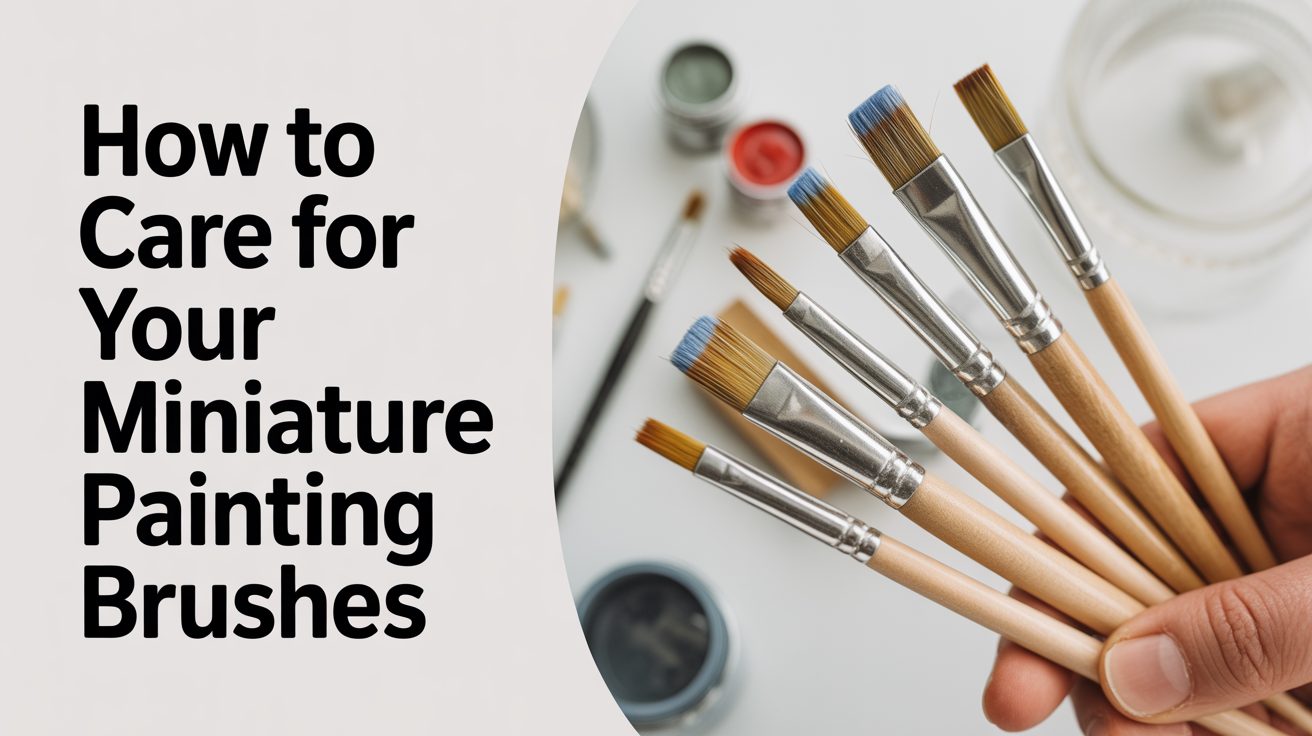
Good brushes are the single biggest factor in painting quality, and they die faster than almost anything else in this hobby. Knowing how to care for miniature brushes is the difference between a size 1 round that still has a needle-sharp tip after two years and one that fans out into a clump after two months. The rules are straightforward, but they have to be habits, not afterthoughts.
Why Brushes Die Young
Most brush deaths come down to one place: the ferrule. That small metal collar holds the bristles to the handle. Acrylic paint creeps up into the ferrule while you work, dries there, and starts pushing the bristles apart from the base outward. Once paint cures deep inside the ferrule, no amount of cleaning gets it out.
This is the root cause behind every brush that suddenly refuses to come to a point. The bristles are not bent at the tip, they are splayed at the base, pushed apart by a plug of dried paint that has built up over dozens of sessions.
Preventing this means rinsing more often than feels necessary. Every few strokes, swirl the brush in clean water. Not a stab-and-scrub, a gentle swirl that lets the water pull fresh paint back toward the tip before it has a chance to migrate up. Keep two containers of water: one for rinsing, one cleaner rinse for a final pass before loading a new color. Change the dirty rinse container regularly. Muddy water is nearly useless for flushing the ferrule.
Also check what your painting position is doing. Many beginners hold the brush nearly horizontal and let paint pool at the metal join. Holding the brush at a steeper angle keeps paint toward the tip where you want it.
For more on how different paint types behave, see Miniature Paints Explained: Acrylics, Washes, and Contrast.
The Right Way to Clean at the End of a Session
Rinsing during a session keeps the worst buildup from happening. A proper clean at the end of each session keeps the brush working like new for months.
Step one: rinse under lukewarm running water. Use your fingers to gently work pigment out from near the ferrule, stroking toward the tip, never toward the handle. Avoid hot water because it can loosen the glue that holds the bristles in.
Step two: use brush soap. A small bar or pot of brush soap sits in most hobbyists' toolkit and gets used far too rarely. Wet the brush, swipe it across the soap, then work it in small circles on your palm. You will almost always see color come out even when you thought the brush was clean. Rinse, repeat until the lather is white.
Step three: reshape the tip. While the bristles are still slightly damp, use your fingertips to draw them back to a point. Do not twist hard, just a gentle roll and pull toward the tip. The brush holds that shape as it dries. Skip this step and the bristles dry however they happen to land, and over time that means a tip that droops or fans.
Step four: store horizontally or tip-up. Never set a brush down with its tip pressing against anything, and absolutely never drop it into a cup tip-down. Standing bristle-down in water is one of the fastest ways to permanently bend the tip. The bristles curl under the weight of the brush and dry bent. Even a few minutes can leave a crook that is hard to recover from.
A Do's and Don'ts Table
| Do | Don't |
|---|---|
| Rinse every few strokes during painting | Let paint dry anywhere near the ferrule |
| Use brush soap at the end of every session | Use hot water (it loosens the glue in the ferrule) |
| Reshape the tip while still damp | Leave brushes standing tip-down in water |
| Store brushes flat or tip-up | Scrub hard against a container bottom |
| Use a separate rinse cup for finals | Paint with a brush that is already drying out |
Brush Soap: What to Use and How Often
Purpose-made brush soap, available in small tins or bars, is the standard recommendation. It cleans paint without drying out natural hair bristles, and many formulas include a conditioner that keeps sable hair supple. A bar lasts years even with daily use, so it is one of the cheapest investments in the hobby.
You can also use a mild hand soap or even a tiny amount of gentle dishwashing liquid in a pinch. What to avoid is anything with alcohol or harsh detergents, and any remover or solvent not specifically listed as safe for natural or synthetic brush hair.
Clean your brushes with soap after every session, not just when they feel dirty. Acrylic paint is water-soluble when wet and practically indestructible when dry. Waiting even a day to clean a brush that had heavy paint use can mean the ferrule fill is already set.
Rescuing a Brush With a Bent or Splayed Tip
Not every damaged brush is finished. If the tip is bent but paint buildup is not severe, try this: wet the brush, apply soap, then roll the tip back into shape against your palm and let it dry wrapped loosely in a scrap of paper towel shaped into a point. Sometimes the bristles have memory and spring back after a few cycles.
For brushes with dried paint inside the ferrule, there are dedicated brush restorers sold in small bottles. These are stronger solvents meant to break up cured acrylic. Leave the brush tip-down in a small amount of restorer for the time listed on the product, then rinse and wash with soap. Results vary depending on how long the paint has been in there, but it can recover brushes that would otherwise be thrown out.
Synthetic brushes are generally less forgiving than natural hair here. They hold a point well when new but bounce back less reliably after abuse. Natural sable is more resilient with conditioning but significantly more expensive.
If you are still building out your brush kit, see What Brushes Do You Need for Miniature Painting for a guide on which sizes matter most for beginners.
Habits That Compound Over Time
Single sessions of careful brush care are good. Doing it every session compounds into brushes that outlast what most people expect.
A few small habits that add up quickly:
- Keep a paper towel nearby and blot the brush rather than wiping it hard against the edge of the water cup
- Load paint with a sideways stroke, not a stab into the bristles
- Check before you load: if the brush looks dry, take a second to wet it gently first
- Never use a good detail brush to mix paint; use an old brush, a palette knife, or a cheap flat brush for that
- After reshaping the tip, resist touching it while it dries
One thing that catches beginners off guard is thinning technique. Overloaded brushes with unthinned paint push a lot of pigment toward the ferrule fast. See How to Thin Your Paints: The Most Important Beginner Skill for how thinning also reduces the stress on your brushes by keeping paint flowing where you want it.
Frequently Asked Questions
How often should I wash my miniature painting brushes?
After every painting session, at minimum. If you are doing a long session with heavy coverage work, a mid-session wash with soap is worth the two minutes. The more frequently paint gets properly rinsed out, the less buildup accumulates in the ferrule over time.
Can I use regular hand soap to clean my brushes?
Yes, in a pinch. A gentle, unscented hand soap works reasonably well for acrylics. The main advantage of dedicated brush soap is that it is formulated to condition natural hair bristles and is less likely to dry them out with repeated use. If you are using synthetic brushes exclusively, the difference is less significant.
Why does my brush tip split in two after painting?
This almost always comes from paint dried inside the ferrule pushing the bristles apart from the base. It can also happen from pressing too hard while painting, which bends bristles against their natural curve. Consistent soap cleaning and lighter pressure both help. A brush restorer can sometimes fix early splits if the buildup is not too deep.
Is it worth buying expensive brushes as a beginner?
Starting with mid-range quality brushes makes more sense than going straight to high-end sable. The reason is that brush care habits take time to build, and it is easier to learn technique on brushes where a mistake is less costly. Once you know how to care for miniature brushes consistently, investing in better quality pays off because a well-maintained good brush genuinely outperforms a neglected expensive one.
What is the best way to store brushes long-term?
Flat in a brush roll or tip-up in a cup with nothing pressing against the bristles. If storing for weeks or months, reshape the tips first and make sure they are completely dry before rolling or covering them. Moisture trapped against bristles can cause issues with natural hair brushes over long storage.