How to Batch Paint an Army of Miniatures
Learn how to batch paint miniatures with an assembly-line approach that saves time and keeps your army looking consistent on the table.
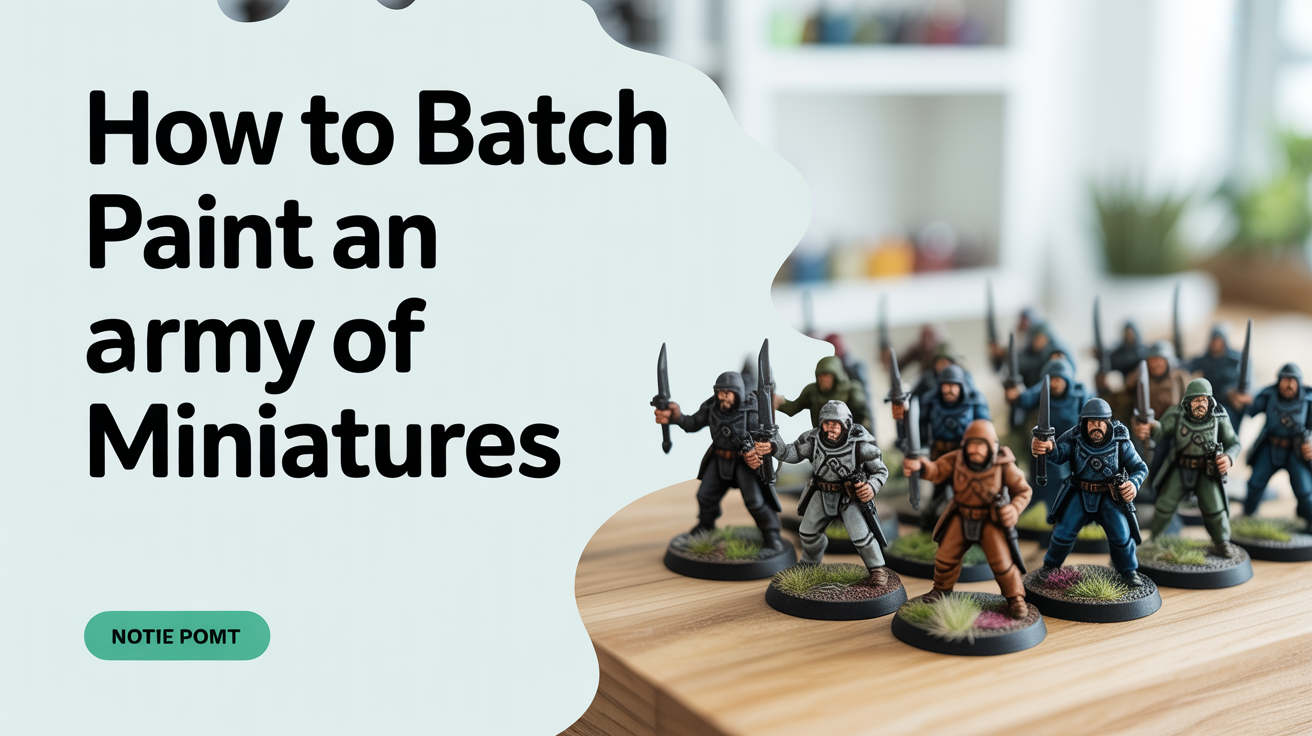
Painting an entire army one model at a time is the long road. Batch painting groups multiple miniatures together so you apply each color across all of them before moving on. The result is a consistent army finished in far less total time than if you cycled through every stage on a single model before picking up the next one.
This guide walks through how to set up and run that process, even if you have never tried it before.
What Batch Painting Actually Means
The core idea is simple: treat your painting session as a production line. Instead of finishing one miniature completely before starting another, you do one step across every miniature in the group, let it dry, then move to the next step.
A batch can be anywhere from five models to thirty, though most beginners find ten to fifteen a manageable starting size. Too few and you lose the time benefit. Too many and wet paint dries out while you work your way down the line, or the sheer number feels overwhelming halfway through.
The tradeoff worth knowing upfront: batch painting trades some individual character for speed and consistency. For rank-and-file troops that spend most of their time on the table, that is the right trade. For a single hero or centerpiece model, you might prefer taking your time on just that one.
Setting Up Your Assembly Line
Before you open a pot of paint, organize your workspace and models.
Assemble and prime everything first. All models in the batch should be fully assembled, cleaned up, and primed before you start painting. Stopping mid-batch to assemble a straggler kills momentum. Prime them at the same session if possible so the primer shade is consistent across the group. Always prime outdoors or in a well-ventilated space, following the manufacturer's instructions on the can.
Group models on a long strip of masking tape or individual holders. Being able to pick up several at once, or easily rotate through them, saves a surprising amount of time. Some painters work left to right along a row and mark their place.
Pre-plan your color order. Write down every color step before you start: basecoat colors, wash colors, highlight colors, and basing materials. This stops you from second-guessing mid-session and makes it easy to pick up where you left off another day.
Mix enough paint. Running out of a basecoat mix halfway through your batch and struggling to match the color is frustrating. Mix a slightly larger puddle than you think you need. A wet palette helps keep paint workable longer across a long session.
Running the Basecoat Pass
The basecoat pass is where batch painting pays off most obviously. You load your brush with your first color, paint that area on model one, move to model two, and keep going. By the time you reach the last model, model one is usually dry enough to revisit if needed.
Focus on one area or color at a time rather than trying to do every color on one miniature before moving on. For example, if your troops have blue armor, grey cloth, and brown leather, paint all the blue armor on every model first, then do all the grey cloth, then all the brown leather.
This matters more than it sounds. Keeping one color in mind at a time means cleaner, more confident brushwork. You are not context-switching between different colors and areas constantly.
A few practical notes:
- Thin your paints to a smooth consistency. If basecoats are too thick they obscure detail. See why miniatures paint goes on thick and clumpy if you are running into texture problems.
- Accept that coverage might take two thin coats. One thick coat is not a shortcut in batch painting.
- Don't stress about keeping every edge crisp at this stage. The wash step covers most of the small slips.
Washes, Drybrushing, and Highlights Across the Batch
Once all basecoats are down across every model in the batch, the remaining steps follow the same assembly-line logic.
Washes are ideal for batch painting because they do most of the shading work quickly. Apply your wash across all models in the batch, let them dry completely, and move on. If you are doing a dark wash over a light basecoat, a single pass across ten models takes only a few minutes.
Drybrushing is similarly fast at scale. A quick drybrush pass to lift raised edges gives the whole batch a consistent highlight before you do any fine work. Run it across every model before refining anything.
Edge highlights and fine details are where you will naturally slow down. This is also where batch painting starts to converge with individual painting: each model needs some attention on its face, any object-source lighting effects, or freehand. Focus these slower passes on the parts of the model that catch the eye at arm's length on the table. A face that reads well from two feet away does not need the same time investment as a display piece meant to be examined up close.
If you find brush marks appearing in highlighted areas, fixing brush marks on miniatures covers the most common causes.
Basing and Sealing the Whole Batch
Basing is another step that benefits significantly from doing all models at once. Mix your basing texture or glue, apply it to every base in the batch, let it dry, then drybrush all the bases at once. Add static grass or tufts across all of them in one pass. The bases end up uniform, which makes the army look intentional and cohesive even if individual miniatures have minor variation.
Seal the whole batch at the end rather than individual models. A spray varnish coat protects all of them at once. Do this outdoors or with strong ventilation, and check the temperature and humidity guidelines on the can before spraying. Humid conditions cause spray varnish to go cloudy on the surface, so pick a dry day if you can.
Keeping Momentum Across Multiple Sessions
Most people cannot finish a ten-model batch in one sitting. That is fine. The advantage of the assembly-line method is that you can stop after any step and pick up exactly where you left off.
Keep your written color plan somewhere visible. Leave your models set up so you do not have to unpack everything each session. Some painters keep a reference model, meaning one completed miniature from an earlier batch, nearby so they can match colors without guessing.
Splitting a large army into smaller batches, then painting those batches in sequence, is also a common approach. Finish ten, then tackle the next ten. Each completed batch gives you a clear sense of progress and a ready reference for the ones that follow.
For more ideas on speeding up your process without cutting corners on quality, painting miniatures faster covers additional time-saving approaches.
Frequently Asked Questions
How many miniatures should I batch paint at once? Ten to fifteen is a practical range for most beginners. It is enough models that you see real time savings, but not so many that the batch feels unmanageable or paint dries out before you reach the last model. Start with a smaller number, see how it feels, and adjust from there.
Do all models in a batch need to be the same sculpt? No. They do need to share roughly the same color scheme, though, otherwise you lose the efficiency of doing one color across all of them. Units with the same uniform colors are natural batches. Characters with unique color schemes are usually painted individually.
What if I run out of a mixed color halfway through a batch? Stop, remix as close a match as you can, and continue. The slight variation will be nearly invisible once washes and highlights are applied. The bigger mistake is trying to use the wrong color and noticing the mismatch on every finished model.
Can I batch paint and still have models look good individually? Batch painting determines your floor, not your ceiling. The approach gets every model to a solid tabletop standard quickly. If you want a model to stand out, add extra highlight passes, freehand details, or more time on the face after the batch steps are done.
Do I need to prime models in the same session I paint them? No, but priming all models in a batch before you start painting is important. You want consistent primer coverage across the group. Priming a few models, then priming the rest a week later, can leave subtle surface texture differences that show through light basecoats.