What You Need to Start Painting Miniatures
A clear, no-fluff list of miniature painting supplies for beginners — paints, brushes, primer, and a few extras that actually matter.
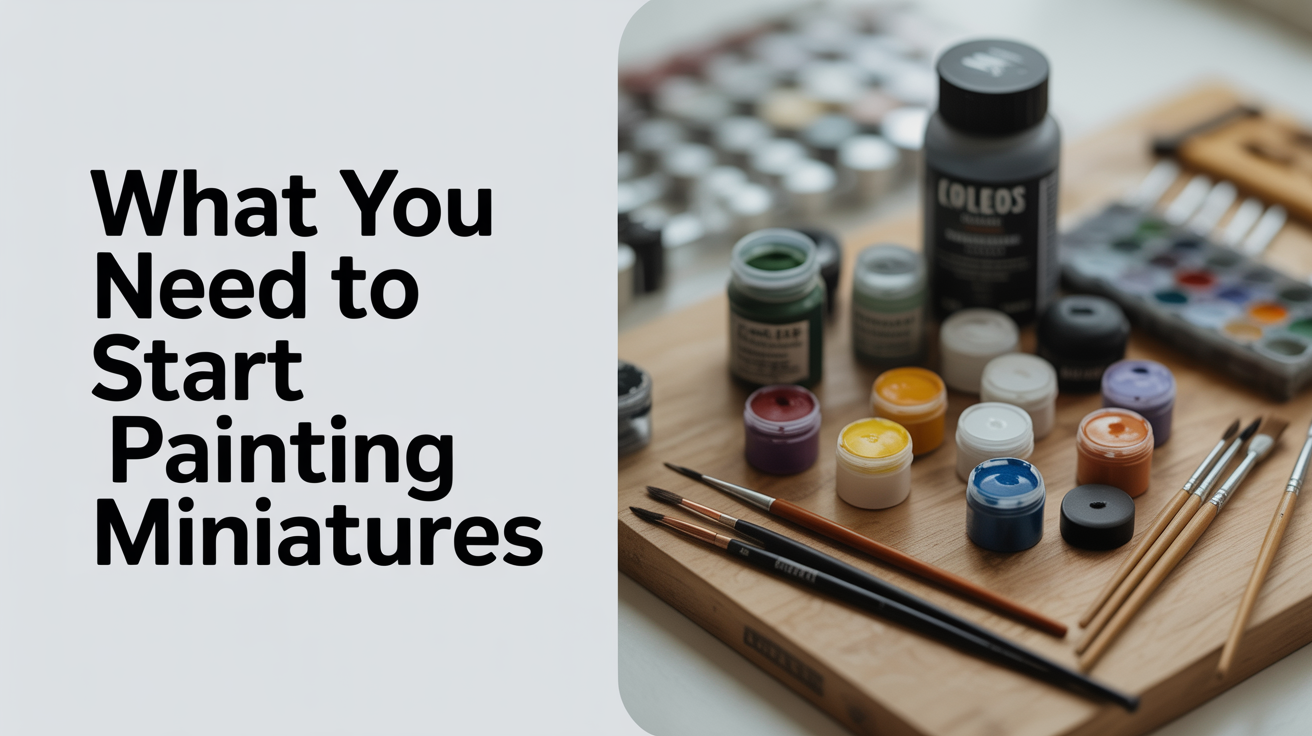
The good news: miniature painting starter kit costs are modest. You can get a genuinely useful setup for $40 to $80, and the supplies that matter most fit in a shoebox. This guide covers exactly what to buy and what you can skip until later.
The Short List First
Before getting into detail, here is the core gear. Everything in this checklist is discussed in the sections below.
Essential checklist:
- Primer (spray can or brush-on)
- A basic paint set (8 to 16 colors covering the main groups)
- Two or three brushes (sizes 1, 0, and a larger basecoat brush)
- A wet palette or disposable palette paper
- Two water pots (one rinse, one clean)
- Matte varnish for sealing
- Adequate lighting (a daylight lamp makes a real difference)
That is the full kit. Everything else is optional to start.
Primer: The Non-Negotiable First Step
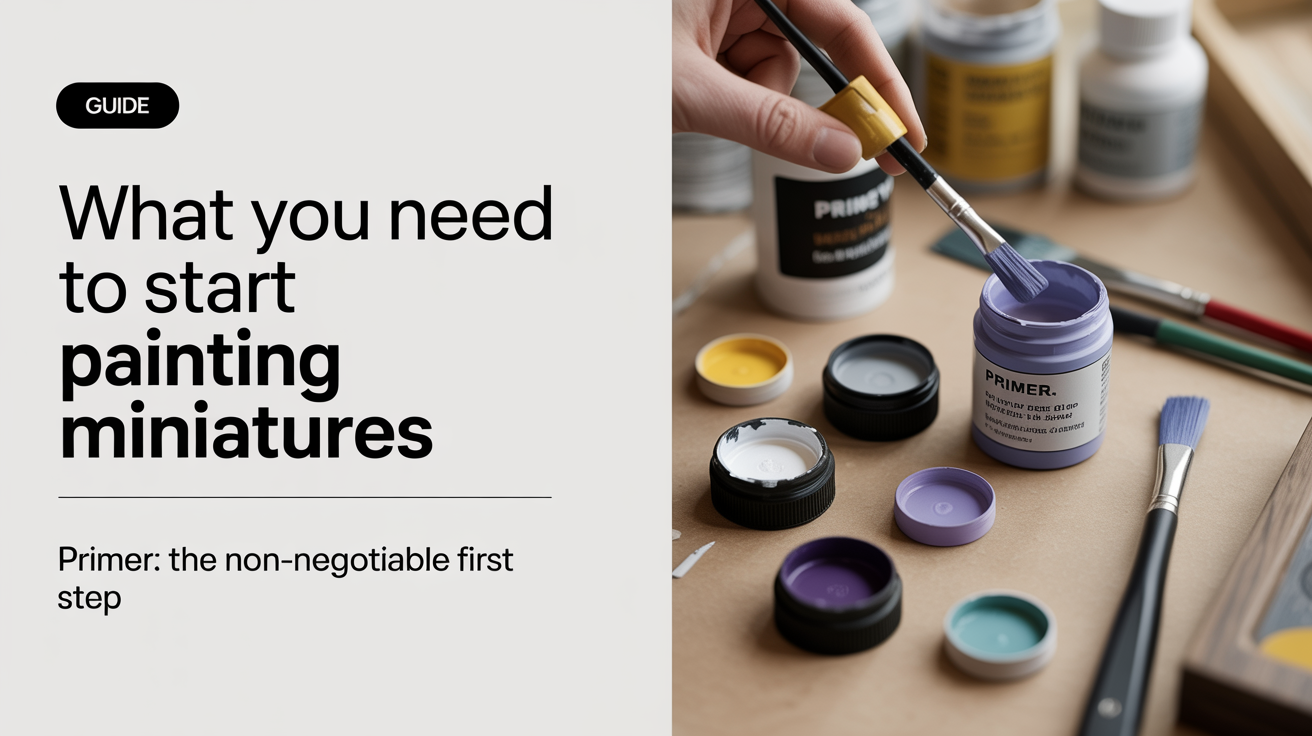
Primer is the one supply most beginners skip, and skipping it always costs you later. Paint applied directly to bare plastic or metal beads up, chips on contact, and loses detail quickly. A thin coat of primer gives paint something to grip.
Spray primers are the fastest option. A gray primer is the most forgiving starting point because it reveals high and low points on the model clearly. Black primer produces darker, moodier results and hides thin coverage better. White primer pushes colors brighter.
Brush-on primers work fine if you are painting indoors during cold or humid weather, or if you are working with just one or two small models. They take a little longer to apply evenly but the result is comparable.
Either way, aim for thin, even coverage. Two light coats beat one heavy one.
Paints: What Kind and How Many
Miniature paints are sold in small dropper bottles or flip-top pots and are pre-thinned for detail work. Standard craft acrylics from a hobby store are not a good substitute, they dry too fast and too thick.
A beginner paint set from any of the major miniature paint brands will typically include:
- A few neutral colors (white, black, gray)
- Earth tones (browns, bone, tan)
- Primary and secondary colors (red, blue, green, yellow)
- A metallic (silver or gold)
That range covers nearly any model you will paint early on.
Paint types to know:
- Base paints / layer paints: Opaque, meant to cover in one or two coats. These are your primary colors.
- Washes / shading paints: Thin, fluid paint that flows into recesses and adds depth with almost no technique required. Every beginner benefits from owning two or three washes.
- Dry paints / contrast paints: Specialty formulas. Useful but not required at the start.
Start with a set of 12 to 16 paints that includes at least one wash. You can expand from there once you know what colors you actually use.
For more on finding your first project to match your paints to, see Choosing Your First Miniature to Paint.
Brushes: Two or Three Is Enough
You do not need a large brush collection. Many experienced painters do almost all of their work with two brushes. For beginner mini painting supplies, focus on quality over quantity.
Recommended sizes:
- Size 1 or Size 2 for basecoating larger areas
- Size 0 for most detail work
- Size 000 or 00 for fine details (optional at first)
Brush quality matters more than brand name. Look for brushes with a good point that snaps back after a stroke. Natural hair brushes (kolinsky sable in particular) hold a point well and carry more paint, but good synthetic brushes have improved significantly and cost less.
The most common mistake is buying cheap multipacks. They seem like a deal until the bristles splay on the third use. One or two decent brushes will outperform a dozen bad ones.
Take care of your brushes: never let paint dry in the ferrule (the metal band), and store them upright or flat, never bristle-down in a water pot.
Palettes and Water Pots
Paint consistency is the single biggest factor in how smooth your results look. Too thick and the paint clogs details. Too thin and it runs everywhere.
A wet palette solves this. It keeps paint workable for hours by holding moisture under a semipermeable membrane. You can buy one or make one with an airtight plastic container, a damp sponge, and a sheet of baking parchment. Either version works well.
If you go with a standard palette (a tile, a piece of glass, or a purpose-made palette), expect to work quickly before the paint dries out. Add water in tiny amounts with a brush to thin paint as you go.
Water pots: use two. One pot for rinsing dirty brushes, one with clean water for thinning paint. Mixing rinse water into your paint is a fast way to muddy colors.
Lighting
This is the most overlooked part of any miniature painting supplies for beginners list. Painting under ordinary room lighting makes it hard to see what you are actually doing. Details disappear. Colors look different than they are.
A dedicated daylight lamp (color temperature around 5000K to 6500K) changes the experience significantly. It shows true colors, reveals texture, and reduces eye strain during longer sessions. A simple clip-on desk lamp costs $15 to $30 and is worth every bit of it.
Natural light from a window is excellent but inconsistent. A lamp gives you the same quality of light every time.
Good lighting also pairs with a well-organized workspace. If you are just getting started, Setting Up a Miniature Painting Workspace covers the basics of how to arrange your desk for comfort and efficiency.
Sealing: The Final Step
Once a miniature is painted, a coat of varnish protects the work. Matte varnish is the standard choice because it dries without sheen and preserves the painted look. Gloss varnish is used sometimes as a midpoint step before applying washes (the smooth surface helps washes flow cleanly) and then overcoated with matte at the end.
Spray varnish is fast and covers evenly. Brush-on varnish works too, applied in thin coats. Either way, seal in the same conditions as primer: avoid cold, humid, or dusty environments.
Skipping this step means paint chips off with normal handling. Tabletop models especially need sealing because they get picked up constantly.
Essential vs. Nice-to-Have: Price Overview
| Supply | Essential? | Rough Cost |
|---|---|---|
| Primer (spray) | Yes | $8 to $15 |
| Paint set (12 to 16 colors) | Yes | $20 to $40 |
| 2 to 3 quality brushes | Yes | $10 to $25 |
| Wet palette | Yes (or DIY for ~$2) | $10 to $20 |
| Two water pots | Yes | $0 to $5 |
| Daylight lamp | Strongly recommended | $15 to $30 |
| Matte varnish | Yes | $8 to $15 |
| Brush-on primer | Optional (backup) | $5 to $10 |
| Wash paints (3 to 5) | Highly recommended | $10 to $20 |
| Hobby knife and clippers | Useful for prep | $10 to $15 |
| Spray handle or painting handle | Nice to have | $5 to $15 |
| Magnifier lamp or optivisor | Nice to have | $20 to $50 |
A solid starter budget lands around $60 to $80 covering the essentials. Most of that cost does not repeat, paints and brushes last a long time with basic care.
What to Skip at First
Airbrushes, wet blending mediums, glazing medium, technical paints, basing materials, weathering powders. All useful eventually, none of it necessary now. The goal at the start is to finish a miniature with paint that looks intentional and stays on. Everything else can come after you have done that a few times.
If you are unsure which miniature to start with, the guide to Getting Started Painting Miniatures walks through the full process from unboxing to finished figure.
Frequently Asked Questions
How much does a miniature painting starter kit actually cost?
A functional kit covering primer, paints, brushes, a palette, and a lamp runs $60 to $80. You can start closer to $40 if you skip the lamp and make a DIY wet palette, though the lamp is a worthwhile early addition.
Can I use regular craft store acrylics instead of miniature paints?
They will stick to primer but cause problems. Craft acrylics are thicker, dry faster, and tend to obscure fine detail. Miniature paints are formulated for thin application over small surfaces. The difference in results is noticeable, and a basic miniature paint set is not significantly more expensive.
Do I need expensive brushes?
Not expensive, but not cheap either. A mid-range kolinsky or quality synthetic brush in size 0 or 1 is the most important individual purchase on this list. Two good brushes outperform a ten-pack of poor ones. Expect to spend $5 to $12 per brush for something that holds a point reliably.
Is a wet palette actually necessary?
Not strictly, but it makes the learning process easier. Miniature paints dry quickly on an open palette, and working with dried paint leads to thick, rough coverage. A wet palette keeps paint at the right consistency longer, which directly improves results. The DIY version (sponge plus parchment in an airtight container) costs almost nothing.
What primer color should a beginner use?
Gray is the most forgiving choice. It shows shadows and highlights clearly without the strong bias of black or white. Once you have a few miniatures finished and understand how your paints behave, you can experiment with black or white primer to change how colors read on the final model.