Choosing Your First Miniature to Paint
Learn how to pick the best miniatures for beginners to paint: right size, material, detail level, and where to find affordable practice minis.
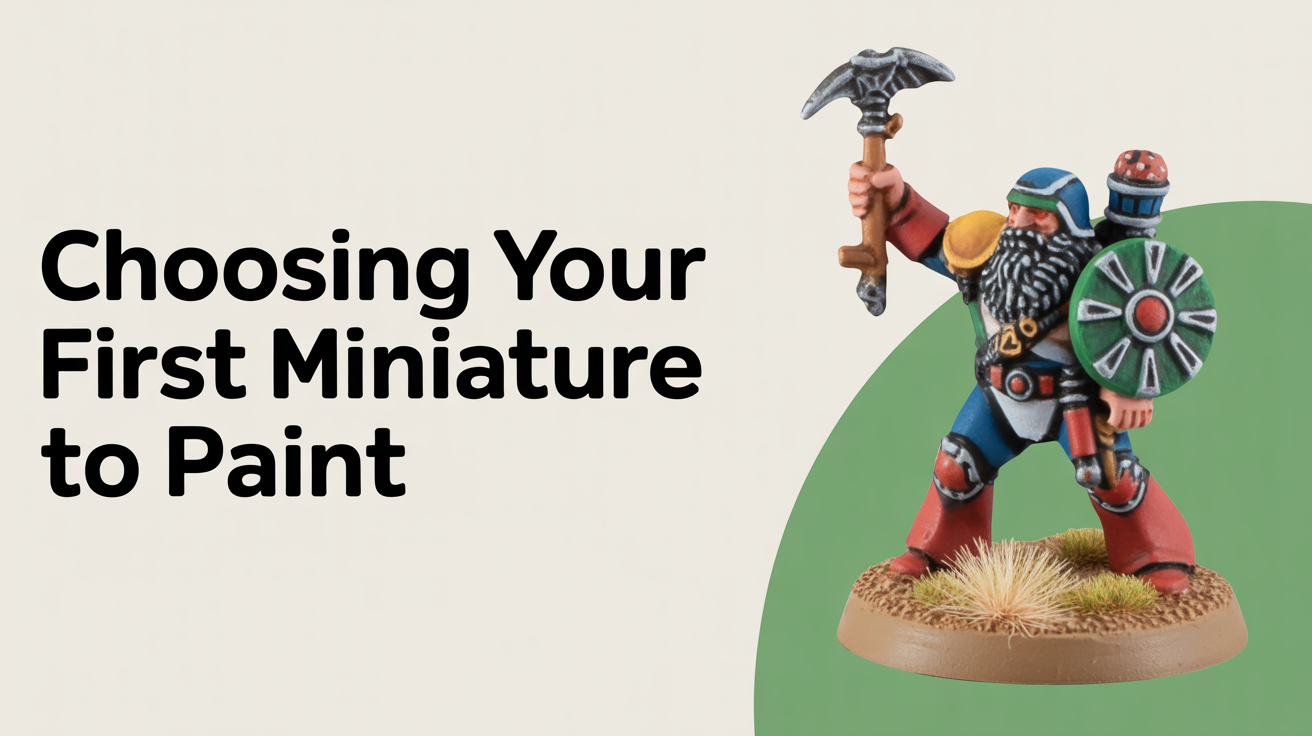
Picking the right first miniature makes a real difference to how much you enjoy your early sessions. The best miniatures for beginners to paint share a few simple traits: they are forgiving of shaky hands, they do not demand a dozen tools, and they cost little enough that you can mess one up without feeling terrible. Once you know what to look for, the choice gets a lot easier.
What Makes a Miniature Good for Beginners
Not every miniature on the shelf is equally learnable. Some are designed for experienced painters chasing fine detail; others are practically built for first attempts. The table below breaks down the traits worth paying attention to.
| Trait | Beginner-Friendly | Avoid for Now |
|---|---|---|
| Size | 28mm to 54mm (larger = more room to work) | Tiny bases under 20mm, swarms, tiny cavalry |
| Material | Plastic | Metal, fine resin, multipart resin kits |
| Detail level | Smooth surfaces, clear distinct areas | Deep undercutting, layered textures, hair/fur |
| Part count | Single piece or two to three parts | Large multipart kits (vehicles, monsters) |
| Cost | Under $5 per model | Premium character sculpts, limited releases |
Larger models with smooth, open surfaces give you the space to practice brush control without constantly fighting scale. A 32mm infantry figure with a clean breastplate and a simple base is a better teacher than a 15mm cavalry trooper covered in sculpted chainmail and a horse's mane.
Plastic First, Everything Else Later
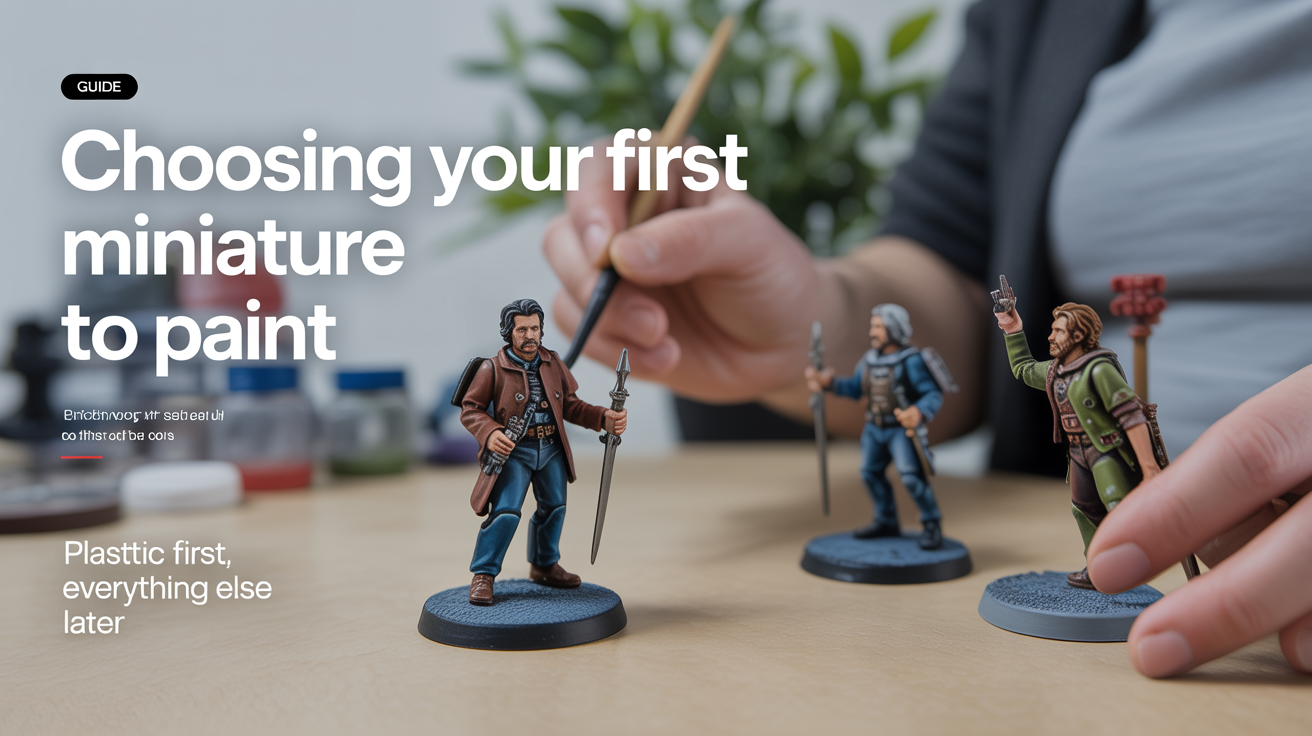
Plastic is the right choice for a first miniature to paint. It is lightweight, easy to clean up with a hobby knife, takes primer well, and glues quickly with plastic cement or super glue. Mistakes are cheap.
Metal miniatures are heavier and require more preparation. They dent brushes if you drop them, and older ranges sometimes have mold lines in difficult spots. Resin can be beautiful, but it needs careful handling (some resins release fine dust when sanded), and it chips more easily than plastic.
Plastic kits from the major fantasy and science fiction game publishers are the default recommendation for nearly every beginner. Starter sets and army boxes often include single-pose infantry models that are ideal for early practice because the sculptor has already made every decision for you.
Size and Scale: Bigger Is Usually Better for Learning
A common mistake is starting with the smallest model in the box. Skirmisher troopers and rank-and-file infantry at 28mm are fine, but if your set includes a larger hero, champion, or monster, that is often the better first project.
More surface area means more room to practice transitions, to test wet blending without racing the clock, and to see what your brush actually did. A 54mm resin bust is one extreme; a 32mm infantry character sits in a useful middle ground. Somewhere between those two points is a comfortable start.
After a few sessions you will want to move to standard-sized troopers, because that is what most game systems are built around. Starting bigger just gives you a slower, more legible first few attempts. There is no shame in that.
Easy Miniatures for Beginners: Specific Types to Look For
Some miniature types are consistently good for early attempts, regardless of game system or manufacturer.
Single-Pose Infantry
These are the backbone of many starter boxes. One piece (or occasionally two parts, body plus weapon arm), clear details, no assembly headaches. They paint quickly and reward basic techniques like basecoating, washes, and drybrushing.
Large Fantasy Humanoids
Orcs, ogres, barbarians, and similarly stocky fantasy figures tend to have generous proportions with strong, readable details. The muscles, armor plates, and belts are sculpted in a way that holds paint well and shows off shading nicely.
Vehicles and Terrain (After a Few Models)
Flat panels, recessed bolts, and geometric shapes are actually friendly to new painters. The techniques are slightly different (drybrushing and panel lining rather than blending skin tones), but the forgiving surface area makes them good secondary practice projects.
What to Avoid at the Start
Avoid multipart character kits with cloaks, hair, and fine filigree for your very first attempt. Similarly, avoid models sold as "pro-painted" stock photos where the painter has used extreme techniques. You are not painting against that standard yet, and comparing your first session to someone's competition entry does nothing useful.
Where to Find Good Practice Minis
You do not need to spend much to get started. A few reliable sources for the first miniature to paint:
- Starter sets from miniature game publishers. Most include several infantry-scale models, occasionally a larger hero piece, and sometimes a small rulebook. Value per model is usually good.
- Contrast/speed paint sample packs. Some paint brands sell a small model alongside a trial size of their quick-shade paint range. These work well because they are designed to demonstrate the paint rather than challenge the painter.
- Second-hand or grab-bag lots. Online forums and local game shops sometimes sell unpainted models in small batches cheaply. Quality varies but the price is usually right for practice.
- 3D printed models. If you have access to a printer (or a friend who does), plain fantasy and sci-fi figures are freely available. Surface texture varies by printer quality, but larger, simpler sculpts print cleanly and are fine for learning.
If you are building a collection of tools at the same time, the guide to what you need to start painting miniatures covers the brushes, paints, and materials worth buying first. There is no need to stock up on everything before choosing a model.
Matching the Model to the Techniques You Want to Learn
The best first miniature to paint is also the one that matches what you are trying to get better at. If you want to practice washes and drybrushing (two of the most useful beginner techniques), pick a model with lots of raised texture: fur, chainmail, rough stone. If you want to practice smooth basecoats and clean lines, pick a model with flat armor panels or simple robes.
This sounds like an advanced consideration, but it is actually simple in practice. Pick a model you find visually interesting, check that it meets the basic size and material criteria above, and start there. Motivation matters more than optimization at this stage.
For a fuller walkthrough of the process from unboxing to finished model, the beginner's guide to starting painting miniatures covers each step in order. And once you have a model chosen, setting up your miniature painting workspace explains how to arrange your desk so that lighting, tools, and paints are where you need them.
Frequently Asked Questions
What size miniature is best for beginners?
28mm to 32mm is the standard range for most tabletop miniatures, and it is a fine starting point. If your first set includes a larger hero or monster model, that is often the better first choice because the extra surface area makes brush control easier to practice and mistakes easier to see.
Is plastic better than metal for a first mini?
Yes, for most beginners. Plastic is lighter, easier to clean up before priming, and more forgiving if you drop it. Metal miniatures are durable and often beautifully detailed, but they are better suited once you have a few paint sessions behind you.
Do I need to buy a whole starter set, or can I buy a single model?
Single models are completely fine. Many publishers sell individual characters or unit boxes with just a few models. A single plastic infantry figure or a small blister of two to three characters is enough to get started and costs less than a full starter set.
What about resin miniatures?
Resin can look exceptional, and some beginner-friendly sculpts are sold in resin. The downsides are that fine resin needs to be washed before priming (release agent residue prevents paint from sticking) and it is more brittle than plastic. Save detailed resin for after you have painted a few plastic models.
Can I start with a model from a board game?
Board game miniatures are often underrated as practice minis. They are usually plastic, single-piece, larger than you might expect, and already in your house if you own the game. Detail is sometimes softer than a dedicated miniature range, but that is a feature for beginners, not a flaw. Games with dungeon crawl or fantasy themes are especially reliable sources.