Is Miniature Painting Hard? What Beginners Should Expect
Is miniature painting hard? Honest answer: easy to start, years to master. Here's what beginners should realistically expect in the first weeks and months.
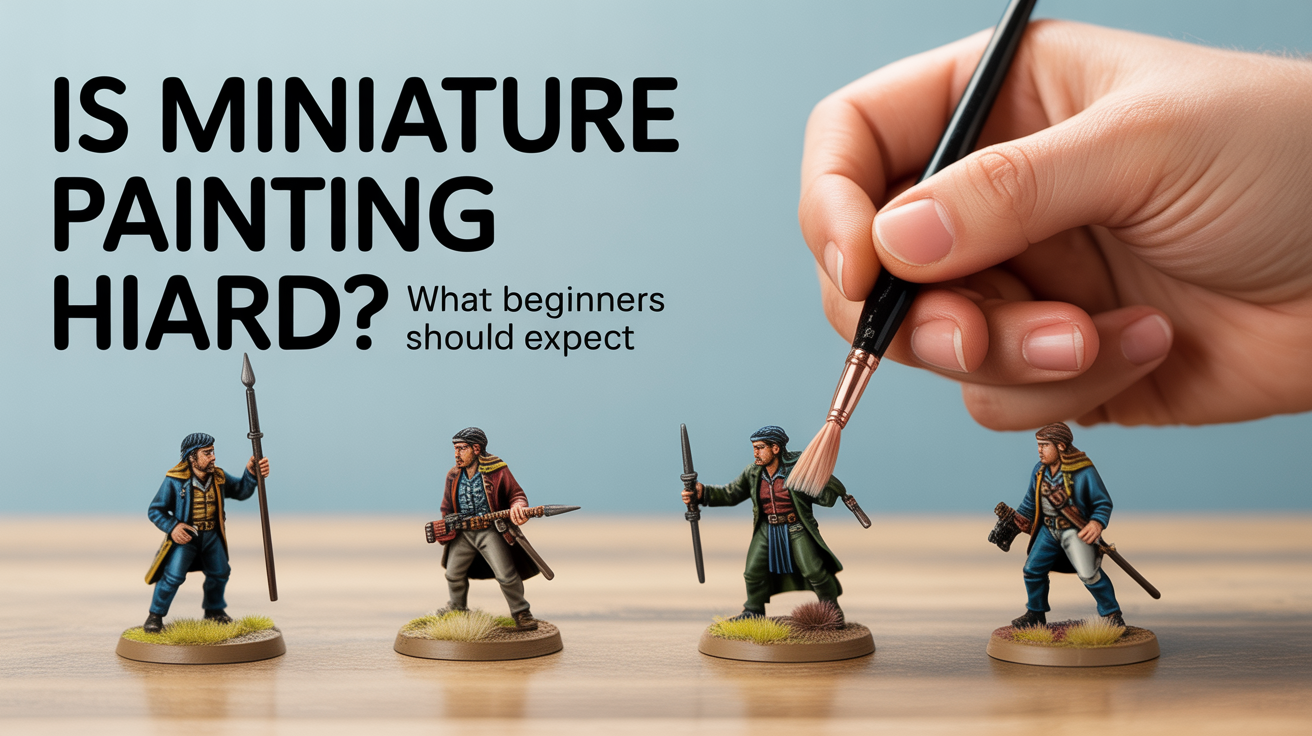
Miniature painting is genuinely easy to start and genuinely hard to master. You can pick up a brush, follow a few simple rules, and finish a decent-looking miniature in a single afternoon. Getting to the point where your work looks like the photos on competition tables takes years of deliberate practice.
That gap is the honest answer to "is miniature painting hard," and understanding it upfront will save you a lot of frustration.
What Makes It Accessible for Beginners
The barrier to entry is low. You need a handful of brushes, a small set of paints, and a miniature. See what you need to start painting miniatures for a no-fuss list that won't drain your wallet on day one.
The core techniques beginners need are also straightforward:
- Thin your paints. Add a small amount of water (or medium) to the paint on your palette until it flows smoothly off the brush without being watery soup. This is the single most repeated piece of advice in the hobby, and for good reason.
- Two thin coats. One thick coat obscures detail and looks chalky. Two thinner coats build up solid coverage while keeping edges and textures crisp.
- Wash. A pre-made wash (the runny, shaded stuff in a bottle) flows into recesses and adds instant depth. Brush it over a basecoated surface, let it dry, and the mini looks dramatically more finished.
- Drybrush. Load a brush with paint, wipe most of it off on a paper towel, then lightly drag the brush across raised surfaces. This catches edges and creates quick highlights without any precision required.
These four techniques alone, applied in sequence, produce a tabletop-quality miniature that looks genuinely good from playing distance. There is no hidden gatekeeping. Anyone can learn them in a session or two.
What Makes It Challenging Over Time
The ceiling is very high. Advanced painters spend years learning to blend colours seamlessly, control extremely thin paint through a fine-tipped brush, understand how light behaves on a three-dimensional surface, and compose colour palettes that read well at multiple viewing distances.
None of that is required to start or to paint minis you're proud of. But it does mean that if you compare your first miniature to work you see from experienced painters online, the gap will feel enormous. That comparison is usually the thing that discourages new painters, not the actual difficulty of the hobby.
The skills that take real time to develop include:
- Brush control. Staying inside the lines on small surfaces takes patience and repetition. Fine detail work, like painting eyes or script, is its own discipline.
- Understanding value. Knowing how dark and light interact is something painters internalize over dozens of minis, not a single tutorial.
- Colour mixing. Matching a tone, adjusting a highlight, or identifying why a colour looks muddy requires a trained eye that develops with practice.
- Smooth blending. Getting two colours to transition without a hard edge is a technique beginners often attempt too early, then abandon. It comes much more naturally after you have solid brush control.
Realistic Expectations: A Skill Timeline
How long does it take to get good? There is no fixed answer, but most painters report hitting meaningful milestones along roughly the following arc. Keep in mind that painting frequency matters as much as raw time.
| Milestone | Approximate Time | What It Looks Like |
|---|---|---|
| First finished mini | Day 1 to Week 1 | Basecoated, washed, drybrushed. Looks great at arm's length. |
| Confident basecoating | Weeks 2 to 4 | Clean coverage, minimal spillover, decent brush control. |
| Comfortable with washes | Month 1 to 2 | You know which washes work on which colours and how much to apply. |
| Basic highlighting | Month 2 to 4 | Edging and layering on raised areas, no blending required yet. |
| Tabletop-quality army standard | Month 3 to 6 | Consistently finishing minis to a level you're happy to play with. |
| Display quality starts | Year 1 to 2 | Smooth blends, freehand, OSL attempts, more intentional colour choices. |
| Competition-level work | Year 3 and beyond | Highly individual at this point; depends on focus and practice volume. |
These are averages, not promises. Some people move faster. Some painters spend years at tabletop standard and are completely satisfied there. The goal is to define what "good" means for your own projects, not to hit an arbitrary finish line.
Your First Miniature Will Not Be Perfect
This is worth saying plainly: the first miniature you finish will not look the way you imagined it. The paint will pool somewhere you didn't want it to. A colour choice that looked good on the palette will look flat on the model. There will be a brushstroke you can see from six inches away.
This is normal. It is also mostly irrelevant.
The point of the first miniature is to finish it, not to master it. Every problem you notice is a lesson that sticks better than any tutorial you could read. Painters who finish five imperfect minis learn more than painters who spend the same hours agonizing over one.
A few things that help with the first mini specifically:
- Stick to a limited palette. Three to five colours is plenty. Too many options early on leads to muddy decisions.
- Prime the model first. Paint does not stick well to bare plastic. A light coat of primer gives it something to grip.
- Work from dark to light. Basecoat first, apply a wash to deepen the shadows, then add highlights to raised surfaces.
- Don't overwork wet paint. Apply a stroke and leave it. Going back over paint that is still drying makes it pill and drag.
For a full walkthrough of the process, see how to start painting miniatures: a beginner's guide.
Choosing the Right First Project
The difficulty of "how hard is painting miniatures" also depends heavily on what you paint first. A huge dragon covered in scales and fine texture spikes is a very different project from a simple armoured foot soldier with large flat armour plates.
Choosing your first miniature to paint covers this in detail, but the short version: pick something small, with large distinct areas, and minimal fiddly detail around the face. Infantry models from most fantasy or sci-fi ranges work well. Single-piece starter models are even better.
Avoid:
- Very small models (15mm and below) until you have solid brush control
- Highly detailed faces as a first project
- Transparent plastic, which requires different priming and shows errors more harshly
- Models with cloaks that span the whole back (smooth large surfaces reveal blending weaknesses quickly)
A modest starting model gives you room to practice the fundamentals without getting stuck on a single difficult area for hours.
Managing the Learning Curve
The miniature painting difficulty curve has a funny shape. Progress feels very fast at the beginning: you can go from "never held a brush" to "painted a presentable mini" in a single session. Then it levels off for a while as you repeat the basics and start noticing your own mistakes more clearly.
That plateau is not stalling out. It's the phase where skills consolidate. The painters who get through it do so by staying consistent (even one mini per week adds up) and by painting things they actually enjoy. Painting a faction you like looking at, or models tied to a game you play, keeps motivation up through the middle stretch.
Communities help too. Forums, local hobby nights, and painting groups are full of people who started exactly where you are and kept going.
Frequently Asked Questions
How hard is painting miniatures for a complete beginner?
Easier than most beginners expect. The core techniques, thin your paint, apply it in layers, use washes for shading, take an afternoon to learn. Getting to a high standard takes longer, but a decent tabletop result is achievable from the very first session.
How long does it take to learn miniature painting?
A few hours to paint your first finished miniature. A few months to reach a consistent tabletop standard. A year or two to develop display-quality skills, and longer still if you pursue competition-level work. Most painters don't aim for the top end and are happy to settle at a level that makes their models look good on the table.
Do I need to be artistic or have a steady hand?
Not to start. The techniques most beginners use (drybrushing, washes) are forgiving and don't require precision. Brush control and freehand work require a steadier hand, but those are skills you develop over time, not prerequisites.
Is miniature painting expensive to get into?
The startup cost is low if you keep it focused. A small brush set, a starter paint range, and a single miniature can run less than thirty dollars. Costs grow as the hobby grows, but you don't need a full studio setup on day one.
What is the most common mistake beginners make?
Paint that is too thick. Thick paint covers texture, looks lumpy, and is hard to blend. The fix is simple: add water to the palette, test the consistency on a spare surface, and apply thin layers. Almost every other beginner problem is either downstream of this one or gets better with repetition.