Drybrushing Miniatures: A Beginner's Guide
Learn how to drybrush miniatures with this beginner's guide: brush prep, paint loading, pressure tips, and how to avoid overdrybrushing.
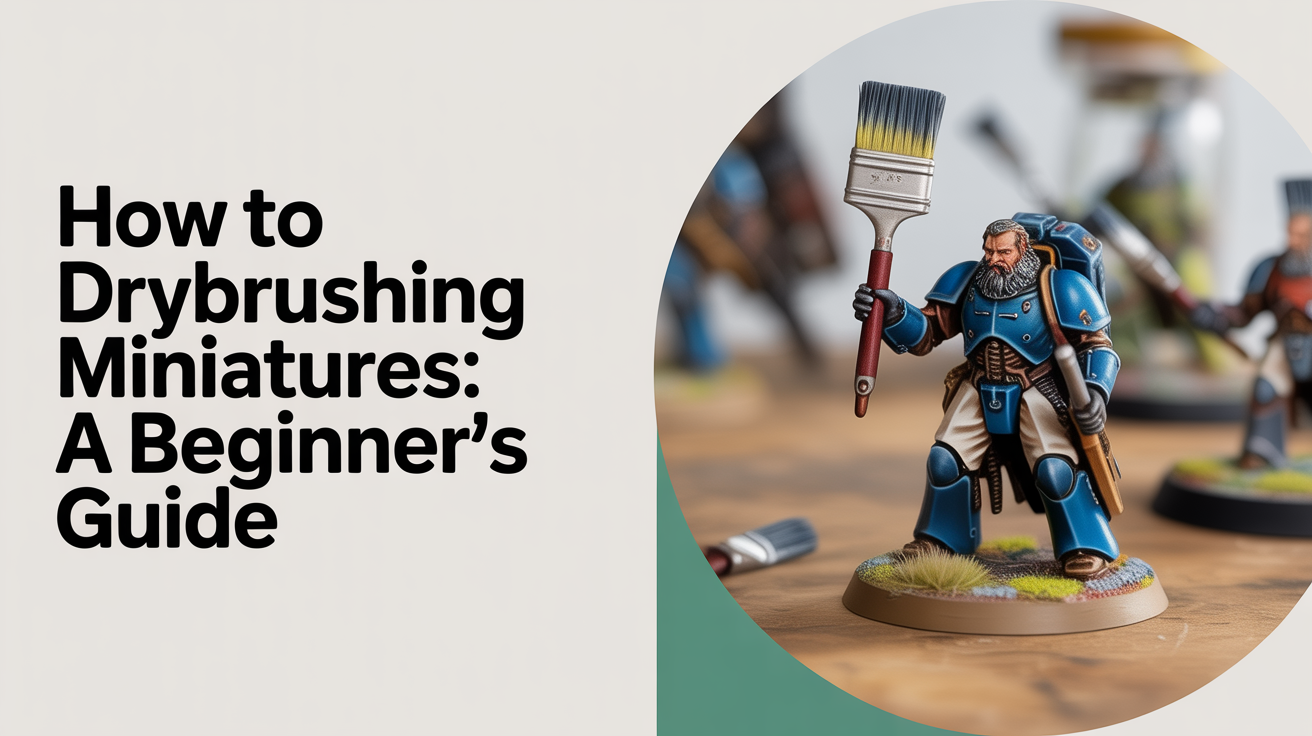
Drybrushing is one of the fastest ways to make raised details pop on a miniature. You load a stiff brush with a small amount of paint, wipe most of it off, then drag what's left lightly across the surface. The tiny bit of pigment that remains catches edges, scales, fur, and texture in a way that takes minutes instead of hours.
At a Glance
- Drybrushing deposits paint almost exclusively on raised surfaces, leaving recesses (already darkened by a wash) untouched. It works best after a base coat and wash, not before.
- It shines on textured surfaces: fur, chainmail, stone, scales, wood grain, textured bases. On smooth skin or flat cloth it looks chalky instead.
- Wipe the brush until only a faint ghost of color transfers to a paper towel. Too much paint left on the brush is the single most common beginner mistake.
- Use an old, already-worn brush. The scrubbing motion destroys bristles over time, so never sacrifice a good detail brush to this technique.
- Build highlights in three or four light passes rather than one heavy pass. Layering is easier to control and harder to overdo.
- If the model ends up chalky or washed out, you have overdrybrushed. Reapply the original wash, let it dry, and drybrush again more carefully.
What Drybrushing Actually Does
To understand the technique, think about how light falls on a real object. The highest points catch the most light; the recesses stay dark. Drybrushing mimics that by depositing paint almost exclusively on raised surfaces, while leaving the lower areas (which you shaded with a wash) untouched.
This is why drybrushing works best after you have applied a base coat and a wash. The wash settles into the recesses and gives you dark, defined shadows. Drybrushing then pulls the eye back up to the detail you want to feature. If you skip the wash step, drybrushing can look muddy because there is no contrast for it to work against. For a solid foundation before you pick up a drybrush, read how to lay down your base colors and how to use washes to shade your miniatures first.
The technique is not subtle. It is not meant to be. It is a blunt tool that works extremely well for certain surfaces, and understanding where it shines will save you a lot of frustration.
What Drybrushing Is Best For
| Surface Type | Why It Works |
|---|---|
| Fur and hair | Individual strands catch the paint and look separated |
| Chainmail and metal armor | Each tiny ring picks up highlight without messy layering |
| Stonework and rubble | Rough textures become instantly readable |
| Scales and feathers | Overlapping edges get caught perfectly |
| Wood grain | The raised grain pops while the dips stay dark |
| Textured bases | Sand, rocks, and grit all highlight in one fast pass |
On smooth surfaces, like a bare face or a flat cloak, drybrushing produces a chalky, grainy result. For smooth transitions on skin or fabric, layering paint on miniatures is the better call.
Choosing the Right Brush
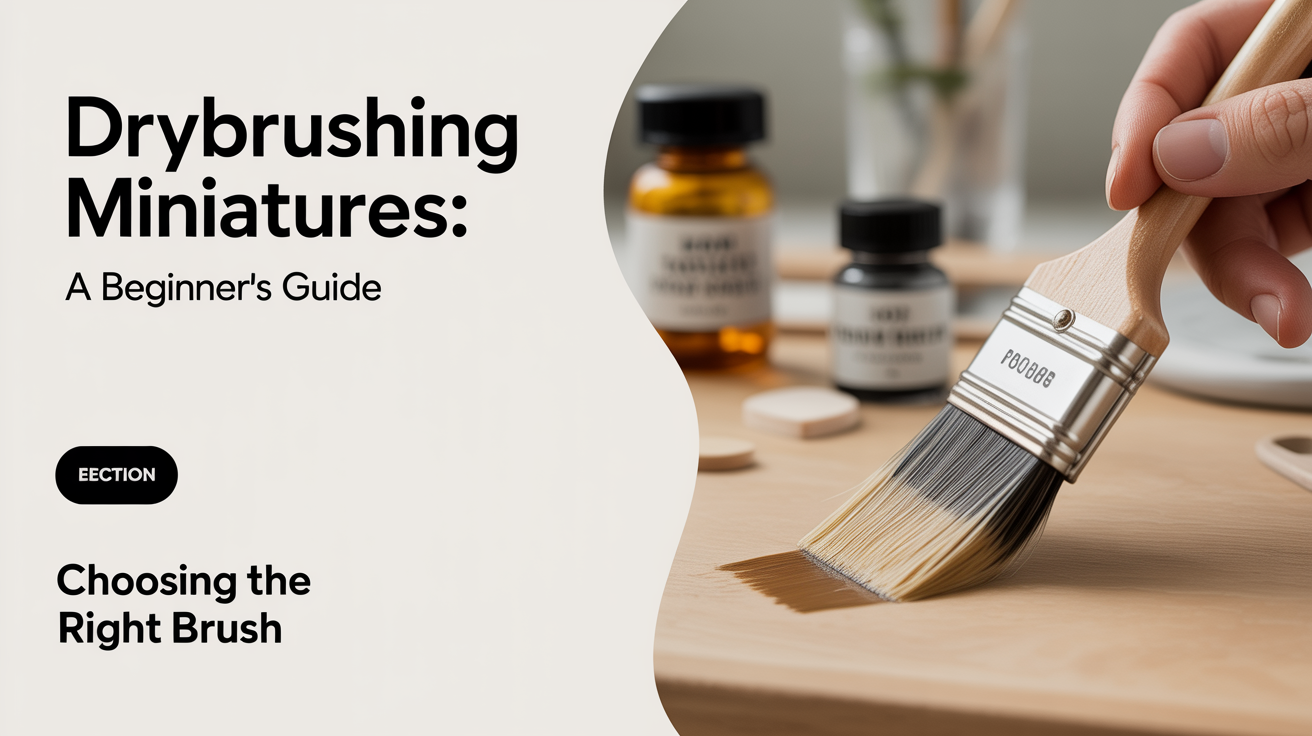
This is the part nobody warns you about: drybrushing ruins brushes. The stiff scrubbing motion destroys the hairs over time, splaying the bristles and making the brush useless for detail work. Do not use your best brushes for this.
The ideal drybrushing setup is an old flat or filbert brush with slightly splayed bristles. Many painters keep a dedicated drybrush that they have already worn out from normal painting. Cheap synthetic brushes are fine, and there is a practical reason they hold up: synthetic filaments last longer than natural bristles and do not expand when wetted, which matters for a brush that gets scrubbed dry against a surface repeatedly rather than loaded wet. Some hobby companies sell brushes specifically labeled as drybrushes, and they do the job well for a low price.
Size matters too. A larger brush (something around 3/4 inch wide) covers big surfaces like cloaks and bases quickly. A smaller brush lets you target specific areas, like a face or a shoulder pad, without accidentally hitting the whole model.
How to Drybrush Miniatures: Step by Step
Learning how to drybrush miniatures is mostly about developing a feel for how dry the brush actually needs to be. That feel comes from repetition, but these steps will get you there faster.
-
Pick your highlight color. Choose a paint that is noticeably lighter than your base coat. For a dark brown fur, try a mid-tan or a light bone. For steel armor, go from dark silver to a near-white silver or even a small amount of off-white mixed in. The bigger the contrast, the bolder the effect.
-
Load the brush lightly. Dip just the tips of the bristles into the paint. You want very little on there. This is not like normal painting where you load the belly of the brush.
-
Wipe most of it off. This is the critical step. Drag the brush across a paper towel or a piece of cardboard repeatedly until almost no paint is transferring. You should see only a faint ghost of color on the towel. If you are leaving thick streaks, there is still too much paint on the brush.
-
Drag the brush across the model. Use quick, light strokes. Brush in the direction of the texture, fur, or detail. The stroke should feel almost like you are tickling the surface. You should barely be pressing down.
-
Assess the result. Step back and look at the model. If the highlights are subtle and the recesses are still dark, you are on track. If the whole surface looks chalky or washed out, you have overdrybrushed (more on that below).
-
Build up in layers if needed. One pass rarely gives a dramatic result. Three or four passes with a nearly dry brush will build up highlights gradually and look more natural than one heavy pass.
-
Add a final edge highlight for key focal points. If you want a face or weapon to read as the center of attention, a single careful highlight with a detail brush after drybrushing sells the focal point without extra work on everything else.
Worked Examples: Picking a Highlight Jump
Choosing how far to jump from base color to highlight color is the part beginners guess at most. These are reliable starting points.
| Base Color | Drybrush Highlight | Result |
|---|---|---|
| Dark brown (leather, fur) | Mid-tan or light bone | Warm, natural fur or leather texture |
| Dark grey (steel armor) | Light silver or off-white | Sharp metallic edge highlights |
| Dark green (foliage, bases) | Olive or khaki | Believable overgrown stone or moss |
| Near-black (stone, rubble) | Mid-grey | Weathered stone that reads at a distance |
| Dark red (cloth, banners) | Dull orange-red or salmon | Soft fabric highlight without looking pink |
As a rule of thumb, the highlight should sit two to three shades lighter than the base color on the same paint line's range, not a completely different hue. A highlight that is too close in value disappears; one that is too far in hue looks like a mistake rather than a highlight.
Pressure and Paint: The Two Variables You Control
The whole technique lives inside these two variables. You cannot separate them, and adjusting one changes what the other does.
Paint load: Less paint on the brush means softer, more diffuse highlights. More paint means starker, harder edges. For beginner work, err on the side of less paint. You can always add more passes. You cannot easily undo a heavy overapplication without painting the whole area again.
Pressure: Light pressure catches only the tallest raised details. Heavier pressure starts to get paint into more areas, including slight curves and moderate textures. On very rough surfaces like sand bases, you can use moderate pressure without worrying too much because everything has texture. On smoother miniatures, keep pressure light.
One practical habit: after wiping on the paper towel, test the brush on the back of your hand before touching the model. If you see a clear, solid stroke, wipe more. If you see a barely-there dusting of pigment, you are ready.
Most hobby acrylics are a pigment suspended in an acrylic polymer emulsion that dries as the water in the mix evaporates, which is part of why drybrushing works at all: as the wiped-down film of paint on the bristles starts to dry mid-stroke, it grips and releases onto raised texture rather than flowing evenly the way a fully wet coat would.
How to Avoid Overdrybrushing
Overdrybrushing happens when too much paint lands on the model and the highlights look chalky, thick, or uniform. The texture and shadows you built up with your base coat and wash get buried under a coat of frosty highlight.
Signs you have gone too far:
- The model looks like it was dusted with powder
- The recesses are no longer dark
- The surface has a rough, grainy appearance in areas that should be smooth
- The highlight color dominates the whole miniature instead of accenting the raised areas
The fix is prevention. Wipe the brush more before touching the model. Multiple light passes are almost always better than one heavy pass. If you do overdo it, let the paint dry completely, apply another wash in the same color as your original shading wash, let that dry, and then drybrush again more carefully.
Some painters deliberately use overdrybrushing as a basecoating technique for heavily textured surfaces like stone ruins or bark-covered tree monsters. In that context it is a feature, not a mistake. Context determines what is too much.
Drybrushing in a Full Painting Sequence
A typical painting sequence for a tabletop-quality miniature looks like this:
- Prime the model (usually a neutral grey, black, or white)
- Base coat every area with flat, solid color
- Wash with a shade that matches the area's tone (brown washes for skin and wood, black for metal, blue or purple for cool tones)
- Drybrush raised surfaces with a lighter version of the base color
- Detail focal points like eyes, gems, and insignia with a fine brush
- Varnish to protect the finish
Drybrushing is step four. It sits between the wash and the fine detail work because it is too coarse for facial features but too fast and effective on large textured areas to skip. You would rarely drybrush after adding your fine detail highlights; that would just blur what you painted carefully.
If you want to push highlights further, you can follow the drybrush pass with a round of layering paint on miniatures on the focal areas. The two techniques are compatible. Drybrushing handles the overall surface fast, and layering refines the spots that matter most.
Frequently Asked Questions
Does drybrushing ruin brushes?
Yes, over time. The scrubbing motion works against the bristles instead of along them, which breaks down the shape of the brush. Keep a dedicated drybrush that you have retired from regular painting, or buy cheap flat brushes specifically for this purpose. Protect your good brushes by never using them for drybrushing.
What paint consistency should I use for drybrushing?
Slightly thicker than normal painting consistency works well. Thin paint tends to bleed and can look streaky even after heavy wiping. Straight from the pot is usually fine. If a paint is very old and has thickened past normal, it is not ideal because it may clump on the brush.
Can I drybrush over a wash that is not fully dry?
No. Always let the wash dry completely first. Drybrushing over a wet wash drags the shade color around and produces muddy, uneven results. On a warm day, most washes dry in 20 to 30 minutes. In humid conditions, give them closer to an hour. When in doubt, wait.
What is the difference between drybrushing and overbrushing?
Overbrushing is the same motion with slightly more paint on the brush. It produces a more dramatic, heavier highlight. It works well for very dark models where you need maximum contrast, like undead miniatures or dark stone. Regular drybrushing is subtler. Many painters use overbrushing as a first pass and then drybrush over it with less paint for a more naturalistic look.
Do I need expensive paints to drybrush?
Not at all. Drybrushing is forgiving about paint brand because the application method does most of the work. Whatever flat, matte-finish paint you have will work. Avoid metallic paints for drybrushing on non-metal surfaces; they catch the light differently and can look strange. For actual metal surfaces like chainmail, metallic paints used in a drybrush pass look great.
How many drybrush passes does one model actually need?
Most tabletop-ready models look complete after two to three light passes across the raised surfaces, sometimes a fourth on high-contrast areas like fur or chainmail. If you are past four passes and still not seeing enough highlight, the brush is likely too wiped out to carry any paint at all rather than under-loaded; reload lightly and try again instead of pressing harder.
Can I drybrush metallic paint over a non-metallic base color?
Yes, and it is a common technique for weapon trim, jewelry, and buckles. Drybrush the metallic sparingly and only on the specific raised edges you want to read as metal. Metallic pigment particles reflect light differently from flat paint, so a heavy-handed pass reads as sloppy rather than shiny. A light touch matters even more here than with standard drybrushing.